19th Sunday in O.T. (B); August 12, 2018
1 Kgs 19:4-8 Ps 34 Eph 4:30-5:2 Jn 6:41-51
Deacon Jim McFadden; (New) Folsom Prison
Homer’s Odyssey…Herman Melville’s Moby Dick…Jack Kerouac’s On The Road—all have something in common: as the main characters make their way through their respective narrative, they point to the journey of life and remind us that we are on a journey.
In our first reading from the 1st Book of Kings, we hear about Elijah’s life journey. At the high point of his life, he faces down the prophets of Ba’al, the pagan god. Elijah is on the top of Mount Carmel with 400 pagan prophets and challenges them to a prophetic duel: he says, let’s prepare a sacrifice; you call upon your god and I’ll call upon mine and we’ll see who responds. It’s a great confrontation; a real test. You can just imagine how contemporary publicists would promote this duel!
The priests of Ba’al really get into it: they pray, dance themselves into a frenzy as they call upon their god. Nothing happens. Elijah taunts them: “So, maybe they’re taking a nap; maybe he’s deaf. Keep calling him.” So, they work themselves into a frenzy: they call and call, slash themselves with swords and spears until they are a bloody mess; of course, nothing happens.
Elijah calls upon Yahweh just once, who brings down fire to consume the sacrifice, proving that there’s only one true God, Yahweh. With that, Elijah has the astounded crowd take the 400 prophets to the brook Krishon, where he slits their throats. Talk about winner take all!
Well, Queen Jezebel is not a happy camper having 400 of her prophets humiliated and slaughtered; so, she had to do something. Jezebel is married to King Ahab, who is a follower of the god Ba’al. If Ba’al is discredited, they will be as well; so she sends her secret police and troops after Elijah, who is now on the run. He is fleeing for his life and if they catch him, they will murder him.
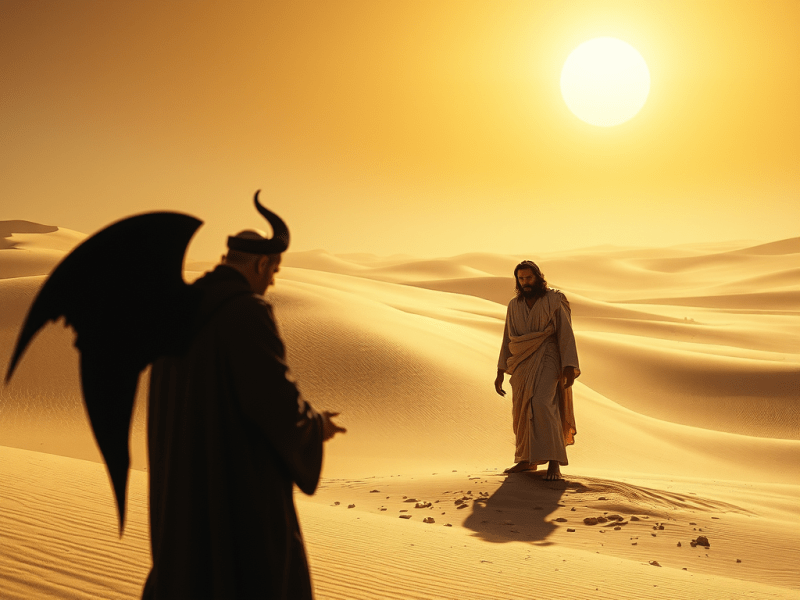
Our first reading opens to this part of Elijah’s journey: Elijah “went a day’s journey into the desert until he came to a broom tree and sat beneath it. He prayed for death: “This is enough, O Lord! Take my life, for I am no better than my fathers” (1 Kgs 19:4). His life, which had just come to a high point with the confrontation of the prophets, is now bottomed out: he’s discouraged and saddened, and so depressed, he wants God to take his life—he wants to die. He is tired of running
The prophet’s prayer for death is not heard. His mission has not yet been completed. Then an angel of the Lord, a messenger from God, comes to him twice, offering him food and drink:
“But then an angel touched him and ordered him to get up and eat. He looks up and there at his head is a hearth cake and a jug of water. After he eats and drinks, he lays down again, but the angel of the Lord comes back a second time, touches him, and orders, “Get up and eat, else the journey will be too long for you!” (vs. 5b-7). It’s not uncommon for God to reveal something in a dream or that people are roused from sleep in order to accept a mission from God.
So, the angel of the Lord directs him to Mount Horeb, (which is another name for Mt. Sinai, the holy mountain). In the strength of the mysterious food and drink, Elijah walks forty days, which is a very significant number, which signifies completeness. Elijah is able to walk forty days in the wilderness just on the strength of that miraculous food, which sustains him. He travels to the mountain to receive a revelation just as his ancestor Moses did. So, we have a story that begins with desperation and ends with the prophet once again actively involved in the affairs of God.
When Elijah wants to give up, he is given food and drink. He receives the power to move forward and he receives a renewed sense of direction and reaches his destination, God’s holy mountain.
People of God, we’re not being pursued by the agents of Jezebel, but can’t we identify with the prophet Elijah? I think most of us can. Many of us, especially those who have lived a while, reach this point: “Life is really hard. I don’t have any energy; the enthusiasm for life is not there anymore. Its all I can do to get through the day. Life has beaten me up. There’s only so many psychological blows I can handle. On top of that I have lost my sense of direction or purpose.” A lot of us become like Elijah the prophet.
When we hit bottom like this, what do we need? The same thing Elijah did: sustenance for the journey and a renewed sense of direction and purpose. Today’s gospel, mirroring the Elijah story, tells us clearly where we can find it: in Jesus, who said, “I am the living bread…anyone who eats this bread will live forever” (Jn 6:51). Notice two things: Jesus, the living bread, is both the means and the end. He’s both sustenance for the journey and he is the destination. Church, the Eucharist is this reality: it is both the means and the end of our journey.
Notice something peculiar: Jesus refers to himself as “living bread.” Now bread is many things: it’s fresh, savory, and pleasant to smell and taste, but, it’s not alive. If you went to a super-market and asked where you can find the “living bread section,” they’d look at you oddly. When you eat bread, it becomes absorbed into your body becoming muscle and bone; in a way, you could say it has become “living bread” as it has become assimilated into you.
But here, it works the other way: as we celebrate the Holy Mass, we enter into the dynamic energy of God when we offer ourselves as gift symbolized by the bread and wine. In return we receive the self-gifting, the Real Presence of Christ. When we consume the Eucharist, we don’t make bread become alive; rather, that consecrated, heavenly bread makes us become alive because it assimilates us to it! When we consume the Eucharist, we are made into the Body of Christ. When we receive Holy Communion, we are receiving the Body, the Blood, the soul, and the divinity of Christ. When that happens, we are drawn into his being, into his life. We now have the means to see as Jesus sees and to live a life similar to his: to value all we do as serving the Father.
Brothers and sisters, the Eucharist is also the end: we have a taste of heaven on earth, because we enter into the mystery of God. Through the Eucharist, we experience heaven in space and time. We experience a oneness with God, each other, and all of Creation. We experience a fullness of self, because we are one with God—which is what our heart desires now and forever!
So, if you want to have sustenance and courage for the journey, make the Eucharist, the living bread, the very center of your life. If you want the joy and satisfaction of a life fully imbued with God, receive Jesus’ gift of living bread.
Amen.


 WWW.DEACONJIM.BLOG
Leave a comment