2nd Sunday of Advent; 12-8-19
Is 11:1-10 Ps 72 Rom 15:4-9 Mt 3:1-12
Deacon Jim McFadden
On the second Sunday of Advent, Matthew calls us to encounter the intriguing figure of John the Baptist, a gritty, down-to-earth, ‘in your face’ prophet. His clothing is coarse: “John wore clothing made of camel’s hair and had a leather belt around his waist” (Mt 3:4ab). Not exactly the GQ look. Moreover, his diet was the ultimate “lean cuisine”: “His food was locusts and wild honey” (v. 4c). Despite his hard scrabble demeanor, we hear that “At that time Jerusalem, all Judea, and the whole region around the Jordan were going out to him” (v. 5).
Something extraordinary is happening. You see, for a 1st century Jews, all the religious movement was towards Jerusalem, which was epicenter of Jewish worship. Indeed, the Temple was the mediating point between heaven and earth. It was where God was most intimately present. It was the place of purification, of sacrifice for the forgiveness of sins.
Instead, a sea-change is taking place: there was an acknowledgment that something besides Jerusalem and the Temple was vying for our allegiance. A revolution was underway and John was right in the middle of it. John was luring people away from the customary place of encounter with God. Why? Precisely because he was communicating to them that a new and definitive place of encounter with God was arriving. In fact, it had already arrived!
Everything that the Temple had represented—forgiveness, purification, reconciliation with God, instruction, judgment—all of that was fully expressed in someone who was coming; someone who John was announcing.
So, we begin to understand some of the metaphors that John was using. Listen: “the one who is coming after me will baptize you with the Holy Spirit and fire” (v. 11). Baptism was a cleansing ritual as preparation for an encounter with God. It was a way of preparing yourself. But, John is tell telling us that the one who is coming is so much more than another prophet who speaks the word of God. The one who is coming IS the Word of God!
He is much more than one who bears witness to the teachings of God because he is the life of God! And, that’s why he can “dip you into” (that’s what ‘baptism’ means in the Greek) the very love of God. He can baptize you in the Holy Spirit.
What’s he coming to do is to fill us up, body and soul, with divine life. Now, what do we make of the metaphor ‘fire’? The Messiah will set you on fire with a whole new manner of existence.
How so? As Immanuel (God among us) Jesus is going to show us what life really looks like because he is Life itself! The divine life, lost to sin, is now restored in Christ because he baptizes in the Holy Spirit. Our body is the temple of the 3rd person of the Trinity. That’s why they’re coming out of Jerusalem into the Jordan River because all that they sought in the Temple they will find in Christ Jesus.
Then we hear: “Even now the axe lies at the root of the trees. Therefore, every tree that does not bear food fruit will be cut down and thrown into the fire” (v. 10). Why? Is the Messiah a harsh, cruel Deliverer? No! When the divine life comes in, whatever is opposed to it must go out. They can’t co-exist! It’s a spiritual law of the soul. There is an expulsive quality to Christ’s arrival. If he comes in, baptizing you with fire and the Holy Spirit, whatever is opposed to him must leave. That’s why all the patterns of self-absorption, narcissism, pettiness, egotism, violence, injustice, prejudice, and intolerance—they all have to be cut down! It’s not a cruel God, but is the expulsive quality of divine grace.
And, then we hear that “His winnowing fan is in his hand. He will clear his threshing floor and father his wheat into his barn, but the chaff he will burn with unquenchable fire” (v. 12). The threshing floor is where the farmer would place the harvest of wheat there. He would rake the coarse grain, then use a winnowing fan and cast the wheat up into the air, where the wind would blow through it, and the chaff would be blown away, whereas the heavier, more substantial wheat would fall to the threshing floor.
So, it goes when the Holy Spirit blows through you and me. He blows away the chaff to be burned away. That’s good news for us in the long run, but is hard when it happens. To burn away all the pettiness, all the distractions that stand between ourselves and God is challenging interior work. But, the Holy Spirit is our Advocate and he will blow away all that unnecessary stuff and allow what is truly substantial within us to truly endure. That’s what is going to happen when Jesus baptizes us in fire and the Holy Spirit!
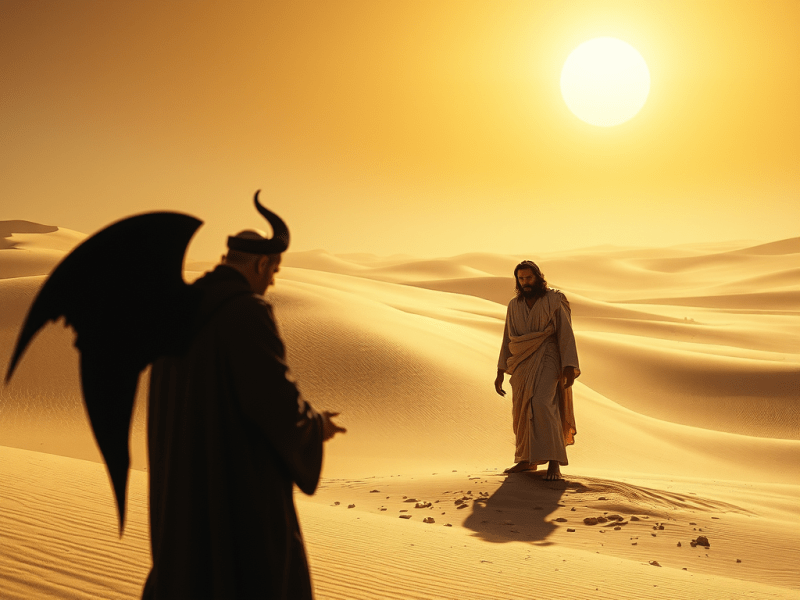
John the Baptist is out in the desert preparing us to hear this great truth. Let us listen! Amen.


 WWW.DEACONJIM.BLOG
Leave a comment