Pentecost Sunday (A); May 31, 2020
Acts 2:1-11 Ps 104 1 Cor 12:3-7,12-13 Jn 20:19-23
Deacon Jim McFadden
When I was a boy, the third person of the Trinity was referred to as the Holy Ghost. Associating ghosts with spooky movies or novels, I wasn’t too keen on interacting with a ghost, however holy he may be. This tentativeness was softened a bit by the cartoon character Casper the Friendly Ghost. If one liked Casper, why not transfer that affinity to the Holy Ghost? Well, for whatever reason, it never happened and I never engaged with the Holy Ghost who became a remote forgotten person in my relationship with God. In the run-up Vatican II, however, we began to speak of the “Holy Spirit.” Perhaps this made him less intimidating to little kids, yet for many of us he is still aloof, sort of a phantom shrouded in a mystery.
In the psychology of the Roman Catholic Church our orientation is very Christo-centric in which the main drama is played out between the Father and the Son. The former sent his only begotten Son into the world for our salvation. It’s only at Pentecost, when all has been accomplished, that the Paraclete promised by Jesus enters the scene. The Father and Son have their unique relationship and in terms of progression the Holy Spirit “proceeds from the Father and the Son.” The Holy Spirit will advocate for us and empower us to carry out Christ’s mission. Indeed, on Pentecost the Church is born of the Holy Spirit and is constituted as the mystical Body of Christ. So, this leads us to view the Church as primarily the Church of the Incarnate Word. And, the Spirit is kind of secondary—almost an afterthought. For many Catholics, the Holy Spirit practically functions as “the Other Guy.”
When the Holy Spirit is marginalized in this way, the Church loses its vitality and enters into a malaise, which may partially explain why 75% of Catholics on any given Sunday are absent from Holy Mass. It wasn’t always this way. Back in the 4th century St. Gregory of Nyssa wrote, “Never think of the Son without thinking of the Holy Spirit.” An early Church Father, St. Iranaeus speaks of the Son and Spirit as the “two hands of the Father.” The Word and Spirit have worked together from the very beginning. Check out the opening lines of Genesis where the Spirit hovers over the primal waters preparing the void and wasteland to receive the creative Word that brings everything into existence.
Keep in mind that it is the Risen Christ who gives us the Spirit. As an afterthought? NO! Why then? Because the Holy Spirit is the Lord and giver of Life. The Father pours himself completely into his only begotten Son, who receives all that the Father is: namely, divine Life. That is why Jesus is Life itself. Through the Incarnation Jesus is going to communicate his divine Life from his Body into the mystical Body of the Church. How does he do that? Through the Holy Spirit who is the shared Love between the Father and the Son. God is completely giving himself to us and he does so through the Holy Spirit, who is the Giver of Life!
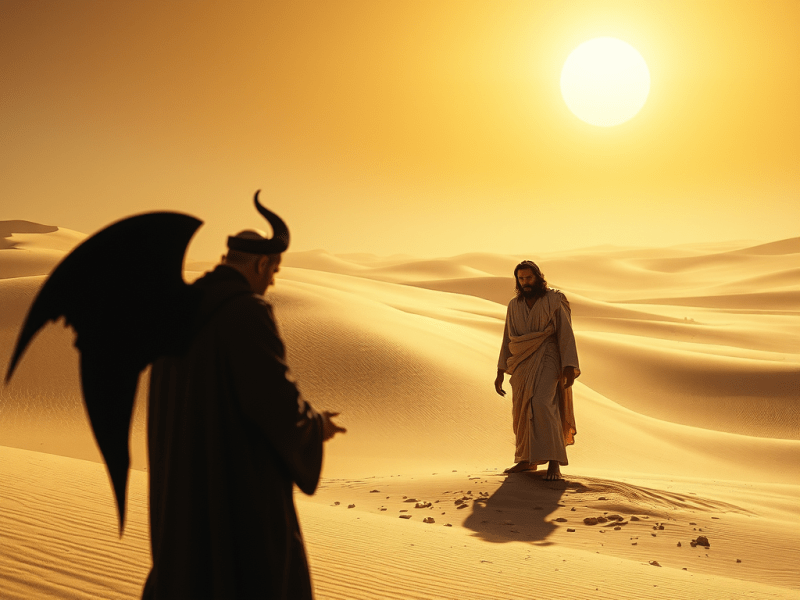
Brothers and sisters, without the Holy Spirit, we wouldn’t be able to profess our faith that Jesus is Lord and we wouldn’t know the One who sent him, the Father. Looking back at Salvation History, it was the Spirit who inspired the prophets who prepared the way for the coming of the Messiah. It was the power of the Holy Spirit that the Blessed Virgin Mary conceived Immanuel in her womb. It was the Holy Spirit who manifested Jesus at the Jordan River as the beloved Son of the Father with whom he is well pleased. It was the Spirit who lead Jesus into the Desert where he would confront Satan and the false interpretations of what it means to be the Son of God. Throughout all of Jesus’ public ministry he was obedient to the Spirit of his Father. And, his final act of the Cross was to give over his Spirit to his Father as he entered death, the tomb, and Hell. And, it was the power of the Holy Spirit that Jesus was empowered to shatter sin and death and it was the Holy Spirit that raised Jesus on the third day. Finally, it was through the Holy Spirit that the grace of Christ is poured forth into his Church.
And, as we gather for Holy Mass either remotely or hopefully in person soon, it is the Holy Spirit that transforms the gifts of bread and wine into the Body and Blood of Christ in the Eucharist. When we receive Communion, we receive the soul and divinity of Christ, we receive his very Spirit. Since the Holy Spirit is the giver of Life, it is the function of him to make the presence of the Risen Christ present throughout the Church. While the historical Jesus was the visible icon of the invisible God, the Church is the visible icon of the Risen and Glorified Christ. Through the Spirit, this gathering of broken sinful people are transformed into the Body of Christ. That means Jesus permeates every member of his Body. That’s what Communion means: to be in Christ…to participate in Trinitarian love which we do only through the Holy Spirit!
People of God, Pentecost Sunday reveals that the 3rd person of the Trinity is not “the other Guy,” but the personal, intentional divine energy that is capable of transforming the world. The Holy Spirit is not an impersonal, mindless, anonymous, blind force, but the loving action the Spirit of God, Who “renews the face of the earth, purifying from evil and selfishness and setting it free from the dominion of death (Ps 104). Let the Holy Spirit speak to you so that God can work through you to change the face of the earth and bring God alive to all who touch you. Amen.


 WWW.DEACONJIM.BLOG
Leave a comment