16th Sunday in O.T. (A); July 19, 2020
Wis 12:13,16-19 Ps 86 Rom 8:26-27 Mt 13:24-43
Deacon Jim McFadden
The parable of the weeds among the wheat continues Jesus’s use of parables to announce the Kingdom of God to the crowds. This one in today’s Gospel is a rather perplexing one: in the field there are good grain and the weed, which deals with the problem of evil in the world and highlights God’s patience in dealing with it.
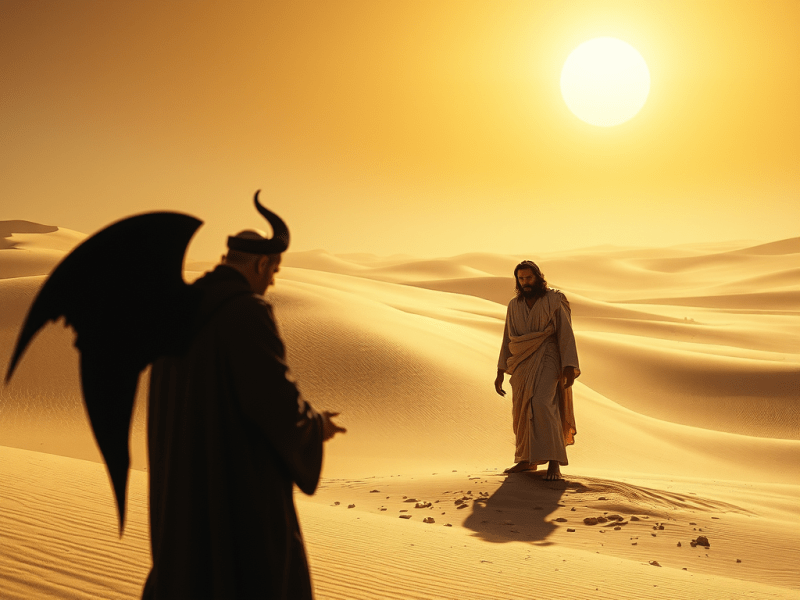
The story takes place in a field where there are two protagonists. On one side is the owner of the field, who represents God and who sows good seed; on the other side is the enemy, who represents Satan, who during the night comes and scatters weed. The wheat produces the stuff of life, but the weed, zizania in Greek refers to a very noxious plant, which will not produce a good end. So, the sower of the weed is the enemy—of God and of ourselves—who always seeks to sow division between individuals, families, nations, and peoples. Whenever there is discord, animosity, fragmentation, that is the work of the Prince of Darkness.
That being the case, why not tear the weed from the field, which is exactly what servants wanted to do immediately. But, the owner of the field, stopped them, explaining that: “in gathering the weeds you root up the wheat along with them” (Mt 13:29). Another problem is that the zizania in its earlier stages closely resembles the wheat and cannot be readily distinguished from it. On the surface, it looks very enticing and alluring.
There are many layers to this parable. First, it teaches us that the evil in the world does not originate with God, but from his enemy, the evil one. And notice that the evil one goes at night to sow weed in the dark, where there is ambiguity, lack of clarity, which gives rise to confusion. Satan is astute: he’s not going to sow the weed in broad daylight, where his lies, false promises, and seductions can be easily seen for what they are. Also, he doesn’t sow the weed in its own separate field where it could be isolated; no, he sows evil right in the middle of the good, thus it is impossible for us to separate them easily. So, the Lord tells us to let the weeds grow amid the wheat! In time the wheat will take root and mature, then the weeds can be easily pulled out without destroying the now strong wheat.
This sounds very messy. But, brothers and sisters, haven’t we found that the character of our personality is a messy interaction of darkness and light? This parable calls us to recognize the darkness that dwells within each one of us: to bring to light the negative influences, evil spirits, that deleteriously impact our relationship with God and others. To be sure, the conflict between good and evil does not occur outside of ourselves, but within each person. The Russian author, Fyodor Dostoevsky affirmed this in The Brothers Karamazov: “the devil is struggling with God, and the battlefield is the human heart.” Everyone is the theater for this battle in which two voices, two persons, are clashing, seeking to win our soul. Between these two voices, our challenge is to discern, to grasp the substantial differences between them. The voice of the enemy distracts us from the present moment where God is present and wants us to focus on fears of the future. Today, we are especially vulnerable during the pandemic where our future is uncertain.
At the same time, the Prince of Darkness wants us to be sad, to be regretful for what has happened in the past. Both of these Satanic strategies are intended to draw us away from the presence of Jesus, who is Immanuel: God among us. On the other hand, the voice of God speaks in the present: ‘With my grace, you can do good, you can share my love with others, you can let go of the regrets and remorse of the past that hold your heart captive. Today, you can be free.”
This is where we arrive at the second theme of this parable: the juxtaposition of the impatience of the servants (“rip the weed from the field”!) and the patient waiting of the field owner, who is God. At times we are in a great hurry to judge—to judge ourselves and others. We’re quick to categorize, to put the good here, the bad there. In so doing, we’re a lot like the prayer of the self-righteous man: “God, I thank you that I am good, that I am not like other men, malicious” (cf. Lk 18:11-12). So, we tend to be “purists” who presume to judge ahead of time who is worthy to be part of our Church gathering, who is welcomed into the Kingdom and who is not.
God, however, is not like that; He knows how to wait. Rather than getting rid of the weeds right now, He sends his grace into the messiness of our lives, where we are most vulnerable. With patience and mercy he gazes into the “field” of every one of us; he sees much better than we do the darkness and evil that dwells within and without. But, he also sees the seeds of good that have taken root in our heart and soul. He nurtures those seeds with his grace, trusting that we will cooperate with him for them to grow.
People of God, there has never been a moment or situation in which God has not been loving you unconditionally. That is why he is so patient with you and me. Our God is a patient Father, whom Jesus invites to call Abba, who will always wait for us and waits with his heart in hand to welcome us, to forgive us. He always forgives us if we go to him.
Finally, we know the outcome of the story. In the end, evil will be removed and eliminated: at the time of the harvest, that is of judgment, the harvesters will follow the orders of the field owner separating the weed to be burned (cf. Mt 13:30).
In the meantime, how should we live? The brief excerpt from Paul’s letter to the Romans offers a direction. Paul suggests that the Spirit is gradually unfolding within us. The Spirit identifies with our vulnerable human condition, takes it on, and comes to our assistance. The Spirit is our Advocate and intermediary between the Father and humankind. The Spirit knows what the Father’s will is and intercedes for us. The Spirit identifies with our struggle to carry the weed/wheat tension; the Spirit identifies with our inability to articulate our struggle and simply groans with sighs too deep for words. We have the Holy Spirit within to be our rock and “giver of Life,” who will lead us ultimately to God.
Let us call upon the Blessed Virgin Mary to help us in this endeavor to accept the reality that surrounds us, not only the darkness and sin, but also the beauty and goodness of life; to unmask the allure of Satan, but above all to trust in the action of God who sows wheat within our history. Amen.


 WWW.DEACONJIM.BLOG
Leave a comment