22nd Sunday in Ordinary Time (A); 8-30-20
Jer 20:7-9. Ps 63. Rom 12:1-2 Mt 16:21-27
Deacon Jim McFadden
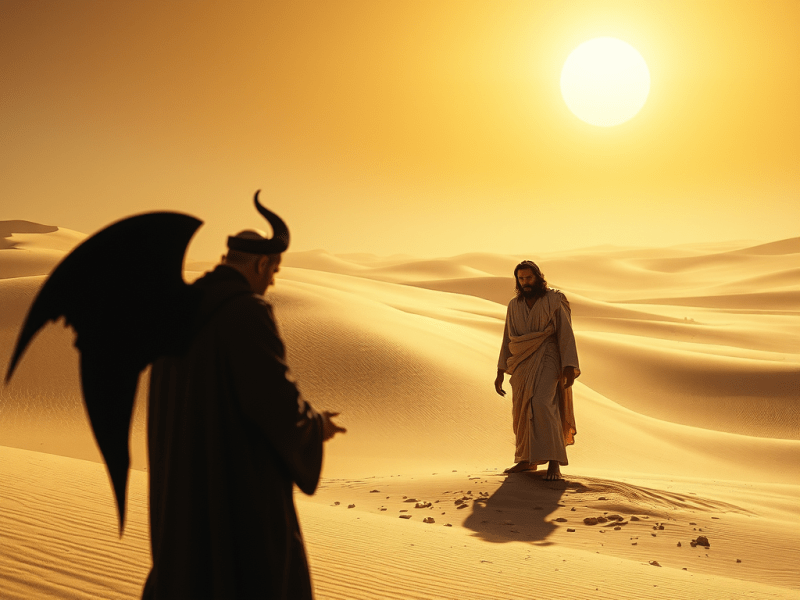
Today’s Gospel passage challenges us to make an either or choice: our life is either about ourselves or its about God. The choice is primordial, which Jesus encountered in his third temptation when Satan promised him all the kingdoms of the world if he would “prostrate yourself and worship me” (Mt 4:9b). It really does come down to that: who or what is our life about? It’s paramount that we get the ‘who’ right!
Today’s passage is a continuation of last Sunday’s, which highlighted the profession of faith of Peter, the “rock” upon which Jesus wishes to build his Church. When Jesus gave Peter the keys to the Kingdom, Jesus will define the Church in terms of duties and responsibilities. Peter, and by extension ourselves in the 21st century, tend to identify our involvement with Church in terms of rights—what we get out of it. Jesus, on the other hand, views responsibility as essential to the life of the Church because it involves reciprocity : the giving and receiving of Life, which is the dynamic of the Trinity. We have grown accustomed to a ‘service-station’ model of the Church where the latter provides services for us. Being drenched in a consumer society, we are comfortable with that model and apply it to the Church. If the Church satisfied my needs, I stay; if not, I disengage, which we witness today as droves of Catholics are leaving the Church.
Echoing Peter, we tend to believe that there is no cost to opening the door so that we can enter the Kingdom.
After establishing Peter as the rock of his Church, Jesus then reveals to his disciples that “he must go to Jerusalem and suffer greatly from the elders, the chief priests, and be killed and on the third day be raised” (v. 21). Jesus is showing us that the way into the Kingdom is death, the Cross. What is Peter’s response, whom Jesus has just made the head of the Church? Peter takes the Teacher aside and reproaches Him because this simply can’t happen to Him, the Christ. Peter is arguing with Jesus that the way to Life cannot come through dying.
Jesus then rebukes Peter with harsh words that are dramatic and to the point: Get behind me, Satan! You are a hindrance to me; for you are not on the side of God, but of men” (v. 23). The man, whom Jesus had earlier called ‘rock’, he now calls the Devil. Yet, notice that he doesn’t take back what he said about Peter being rock. Jesus continues to believe in Peter; he will form him. The only way that Peter will become a rock is to walk through this conflict. Like Peter, we recoil that the way to Life is through death—death to ourselves, death to our egoic ambitions, death to our self-referential conceit that our life is about me. We cannot believe in the Way God brings life into the world. How does God bring Life: through his Suffering Servant.
Jesus is telling Peter that if he does not believe this, he cannot lead the Church—indeed, he will be an obstacle to His path. To underscore his point, Jesus plays on words. A moment before, the Apostle Peter had been blessed by the Father, because he had received the revelation from Him; he was thereby a solid “rock” so that Jesus could build his community upon him. Immediately afterwards he becomes an obstacle: the one who was a rock is now a stumbling stone. Instead of being a rock to build on you’ve become a stone to stumble over because you don’t understand the nature of my teaching. The character of fallen human nature is to believe that we can attain fulfillment by acquiring the goods of the world—wealth, prestige, power, and pleasure. But, Jesus’ way is just the opposite: to be fully human is not to have what the world values, but being in right relationship with God and human beings. Jesus’ way is just the opposite of Peter’s; his Way is that of the Wounded Healer. We are healed through our wounds, through self-emptying not through triumphant power and the accumulation of wealth. By facing our own brokenness, we can bring life into the world.
At this point, the Teacher turns to those who were following Him, and clearly presents the path to follow: “Whoever wishes to come after me must deny himself, take up his cross, and follow me” (v. 24). Just as Peter resisted, the temptation today, too, is that of wanting to follow Christ without the cross. We want to follow Jesus on our terms, not his. But, on the contrary, Jesus’ teaching is the right path—indeed, it is the only way into the Kingdom. Jesus is calling us to forsake a self-preservative approach to life. Jesus seems to be saying that I never commanded you to protect yourself, to build bigger barns to hoard your goods, but to obey the Gospel.
Jesus is reminding us that his Way is based on God’s very nature: namely, Love. And that there cannot be true discipleship without pouring yourself out into the others—by giving your life away by sharing your gifts, talents, and time. We cannot let ourselves be absorbed by the vision of this world, but to be aware of the need and effort for us to walk against the current of our self-absorbed culture.
Jesus completes his proposal for the conditions of discipleship with words that convey an eternal wisdom, which challenge the egocentric mentality and behavior that is dominant in our society. He exhorts: “…whoever would save his life will lose it, whoever loses his life for my sake will find it” (v. 25). This paradox contains the Golden Rule that God inscribed upon our human nature created in Christ: the rule that only love gives meaning and happiness to life. That’s it. To spend one’s own talents, one’s energy, and one’s time only to save, protect and fulfill oneself, in reality leads to losing oneself: that is, is a sad, lonely, and barren existence, which we learned in the Parable of the Prodigal Son. Jesus is calling us to seek the interior discovery of personhood which is a life of self-giving rather than the external protection of life. If our priority is to preserve a materialistic, consumer-driven lifestyle, are we really interested in living in the Kingdom?
Instead, let us live a life for the Lord and base our life on love, as Jesus did: if we deny ourselves, take up our cross, and follow Jesus well be able to savor authentic joy, and our life will not be barren; it will be fruitful.
All of this comes together in the celebration of the Holy Sacrifice of the Mass in which we relive the mystery of the Cross; we not only remember, but we commemorate the redeeming Sacrifice in which the Son of God completely loses Himself so that we may receive eternal Life; so that we may be received by our heavenly Father and thus be found again just as the Prodigal Son was embraced by his Father. Through the Eucharist we are found again, we who were lost. Each time we participate in the Holy Mass, the self-emptying love of the Risen Christ is conveyed to us through consecrated bread and wine, so that we can be transformed, empowering us to be servants to our brothers and sisters. Amen.


 WWW.DEACONJIM.BLOG
Leave a comment