The Solemnity of Christ the King (B); 11-21-2021
Dn 7:13-14. Ps 93. Rv 1:5-8. Jn 18:33-37
Deacon Jim McFadden
On the last Sunday of the liturgical year, we are celebrating the Solemnity of Christ the King. For us Americans, it’s not easy to comfortably ease into this feast because we don’t particularly like kings nor do we like it when people rule over us. As a people we tend to be anti-authoritarian—there’s a bit of rebel in each one of us.
But, kingship is a central symbol throughout the Bible and one of the ways the Gospel authors referred to Jesus. So, we have to come to terms with the notion on its terms, not ours. What may help is to do some cultural “bracketing”, so that we can listen to these readings and to understand the time of Jesus when ancient people took kingship for granted.
To begin with, what did a king do? He is sovereign; he rules and has dominion over us. And, that’s not a bad thing. Indeed, the first king in the Bible was actually Adam who was given a kingly mission—one of governing, ruling, and subduing: “Be fertile and multiply; fill the earth and subdue it. Have dominion over the fish of the sea, the birds of the air, and all living things that move on the earth” ((Gn 1:28).
This is the great commission that’s been given to Adam, which is kingly in mission. This is what a king does. But, don’t think of this as an invitation to aggression, exploitation, and domination which is how many persons of authority and institutions exert power. Rather, see this kingly mission as stewardship of the earth and oneself—who we are and what we have. Mind you, Adam is made in the image of God just as we are. Who is God? God is love; God is a community of love: Father is Lover; Son is the Beloved; and the Holy Spirit is the Loving between them. Therefore, this governance, this dominion over the world is meant to be an expression of love.
Adam and you and I are at our best, when we turn our world into a Garden of Eden: a beautiful condition of communion with God, fellowship with each other, and harmony with creation. How do we do that? By exerting power—by having dominion, so as it make it a place of love, justice, and peace. We are called to allow God’s way of being to obtain in our here and now circumstances. That’s the kingly task given to Adam and, by extension, to all of us.
Unfortunately, Adam became a bad king. As king, he should have had dominion over every creature in the Garden, including the serpent. But, he didn’t. Rather than give his absolute allegiance to God, he allowed the serpent to have dominion over him. As a result, Eden is compromised and the world we live in becomes anything but a Garden of Eden. As descendants of Adam, we are stuck in a world of moral compromise, violence, corruption, hatred, and fear.
O.K., there’s the first king and his great failure, which sets up the momentum of the biblical narrative. God does not leave us to stew in our sin but he forms a rescue operation, in which he will form a people who will be ruled by a new King, who was anointed, sent by God, on a mission of salvation.
Jesus is this King, first the King of Israel and, by extension, the universal King. His mission is to save us: to re-Create the Garden of Eden so that we may participate in a shared life with God now and forever, to be in authentic fellowship with our brothers and sisters now and forever, and to be in harmony with Creation now and forever.
Now, the question is, do we want Jesus to be our King? Do we want him to rule over our hearts and mind or do we want to give our allegiance to someone else. We’ve got to make a choice. As Bob Dylan sang in Slow Train Coming:
“Yes, you’re goin’ to have to serve somebody.
Well, it may be the Devil or it may be the Lord,
But you’re gonna have to serve somebody.”
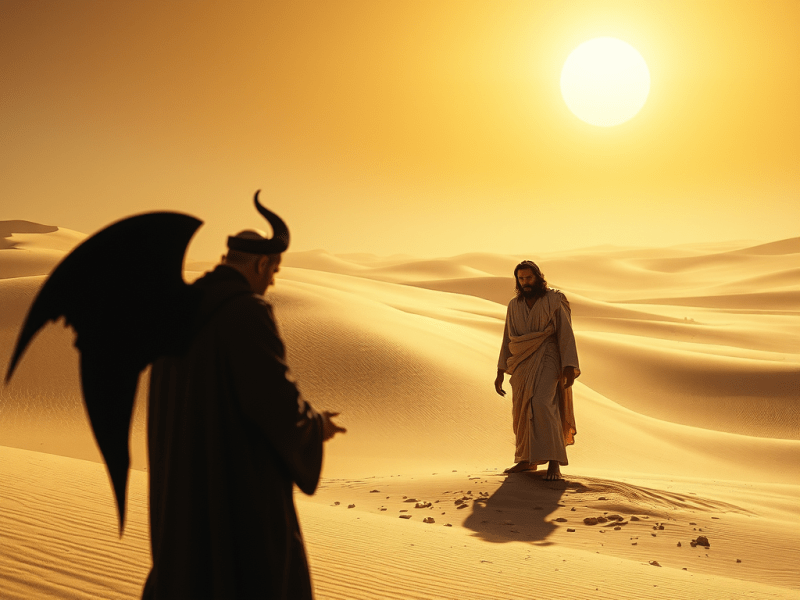
This is a basic, primordial, either-or choice: do we choose Jesus or the serpent, who comes to us in myriad disguises. This is a hard choice and Jesus forewarns us that if we choose him, we will be met with persecution—just check out the last Beatitude. Though we are all sinners and our faith is not what as firm as we’d like it to be, God is patient and merciful. Moreover, if we cling to what the Psalmist says, “O God, you are my God—for you I long…For your love is better than life” (Ps 63:4). If we can stay grounded in God’s love, if we keep our gaze on Christ the King, then we know that at a very deep level of soul, that we will be protected and we will do what is right. And, as St. Paul reassures us: “I am convinced that nothing can separate us from God’s love” (Rom 8:38).
So, brothers and sisters, on this last day of the liturgical year, we ask ourselves: who is our King? Who are we going to serve? Amen.


 WWW.DEACONJIM.BLOG
Leave a comment