Palm Sunday; 6th Sunday of Lent (C); April 10, 2022
Is 50:4-7. Ps 22. Phil 2:6-11. Lk 22:14-23:56
Deacon Jim McFadden
In our Gospel reading for the Palm Sunday procession, Jesus sends his disciples into Jerusalem to prepare for his triumphal entry. As he enters Jesus will be greeted with joyful acclimations as the multitude proclaim, “Blessed is the king who comes in the name of the Lord. Peace in heaven and glory in the highest”
(Lk 19:38). We also know what is to follow: humiliation followed by brutal torture and eventual crucifixion. As we enter into Holy Week, let us keep in mind these polar, characteristic moments and how Jesus responds to them. As being “true man”, as being fully human, Jesus is going to show us how to navigate through these events with patient suffering and, in so doing, enable us to share in his victory over the spirit of evil which can seem so overwhelming.
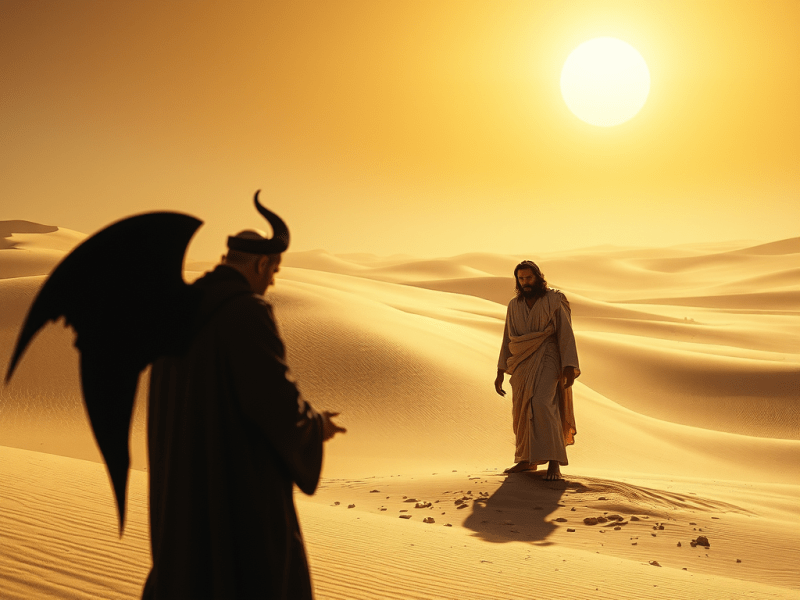
Jesus shows us how to face moments of utmost difficulty, of trauma when life seems to be unraveling and that there is no way out. During these moments of discouragement, we’re vulnerable to temptations as Satan will do everything he can to pry us away from our commitment to God and each other. Jesus wades through these temptations with a heart that is totally at peace. He does so not with Stoic detachment or super-human impassivity. No, Jesus experienced life deeply, to its very core. Rather, what bolstered him was his confident abandonment to the Father and his saving will. The latter is what undergirds reality and Jesus will always be conformed to his Father’s will no matter what the circumstances are. That is why he didn’t resort to Satan’s temptation to use his power for self-preservation. Jesus was not going to recapitulate at the crucial moment of his earthly ministry of not being obedient to the Father. From the experience of the 40 days in the desert to the culmination of his Passion, Jesus rejects this temptation of abandoning his obedient trust in the Father.
As Jesus enters Jerusalem, he must have rejoiced with the people who shouted out his name and acclaimed him as King and Messiah. They were getting it right and that must have gladdened his heart as he saw their enthusiasm and excitement as he processes into the City of David. The crowds were getting so exuberant, that the Pharisees, being true to form, asked Jesus to rebuke his disciples for making such outlandish acclamations. He replied: “If these were silent, the very stones would cry out” (Lk 19:40). Jesus is humble, which is why he enters Jerusalem on a donkey and not a powerful war horse. But, humility does not mean denying reality: Jesus really is the Messiah, the King whose reign will be everlasting, which is why he didn’t rebuke the crowds.
Jesus’ triumphal entry into Jerusalem does not mean that he is going realize his salvific goal with shortcuts or false compromises. No, Jesus is going to move down another track, a sacred path known to him and the Father alone. This path leads from being “the form of God” to the “form of a servant,” the path of total self-emptying, of self-abasement born from obedience “unto death, even death on a cross” (Phil 2:6-8). Jesus knows that he is the Messiah, the anointed one, that he is King who will reign over all of creation forever. He also knows that the only way that his triumph over sin and death can be realized is by making room for his Father’s will no matter what. Jesus knows that the only way of doing his Father’s will is by stripping himself, by self-emptying. That’s why he remained silent, why he prayed, why he accepted humiliation.
You see brothers and sisters, there is no plan B when it comes to realizing our salvation. There is no negotiating with the Cross: one either embraces or rejects it. That’s it—there is no in-between. By his self-abasement, Jesus doesn’t want to spare us from doing the same, but to open to us the path of faith and to precede us on that path. Jesus is showing us the Way; he’s modeling for us what it means to be fully human, to be a disciple.
So, as we enter into Holy Week, let us carry the tension of these opposites: festive acclamations and brutal torture. And, let us keep at the forefront, the silence of Jesus throughout his Passion. He will resist the temptation of demeaning his adversaries, of acting like a Messianic rock-star who could call upon the legions of angels to rescue him at a moment’s notice. In moments of abject darkness, when life seems to be unraveling, we also need to keep silent, to stay grounded in our Faith and not give into anger and resentment. To others the meekness of our silence make us appear to be pitifully weak, like lambs being lead to slaughter. At that moment, Satan will feel emboldened, come out into the open, and ratchet up the temptations. At this juncture, when faced with so much evil, we have to “hold our position,” to stay grounded in our Center, who is our Father, who is never MIA. For the survival of our soul, we need to have the same attitude as that of Jesus. Jesus knows that the battle is between God and the prince of the world and that we must resist the temptation to use the sword, but remaining firm in our faith.
Palm Sunday begins God’s hour. At this hour God will come to fight, but he will use spiritual weapons of mercy, compassion, forgiveness, and self-emptying love. He must allow Jesus to take over—to do it his Way. We know how the story ends—we just have to allow it to happen. As we wait for the Lord to calm the storms of our life, let us stay steadfast in our silent witness in prayer as we give ourselves and others “an accounting for the hope that is within us” (1 Pet 3:15). This will help us live the tension between the memory of the promises made, the suffering of the present moment of our Cross, and the hope of the resurrection. Amen.


 WWW.DEACONJIM.BLOG
Leave a comment