22nd Sunday in Ordinary Time (A); September 3, 2023
Jer 20:7-9. Ps 63. Rom 12:1-2. Mt 16:21-27
Deacon Jim McFadden
After establishing Peter as the rock of his Church, Jesus then begins to speak to his disciples about his Passion. Along the path to Jerusalem , he openly explains to his friends what awaits him in the City of David, where he will “…suffer greatly from the elders, the chief priests, and be killed and on the third day be raised” (Mt 16:21). But his words are not understood because the disciples have a faith that is immature and is still closely tied to the consciousness of this world. They think that the Messiah will bring about an earthly victory, which does not allow the language of the cross.
At the prospect that Jesus may fail and die on the cross, which would bring to ruin their understanding of the Messiah’s ultimate victory, what is the response of Peter, whom Jesus just made the head of the Church? Peter takes the Teacher aside, gets in his face, and says to him, “God forbid, Lord! This shall never happen to you!” (v. 22). Peter believes in Jesus; he wants to follow him, but he just can’t accept that the way to Life comes through dying, especially on the cross.
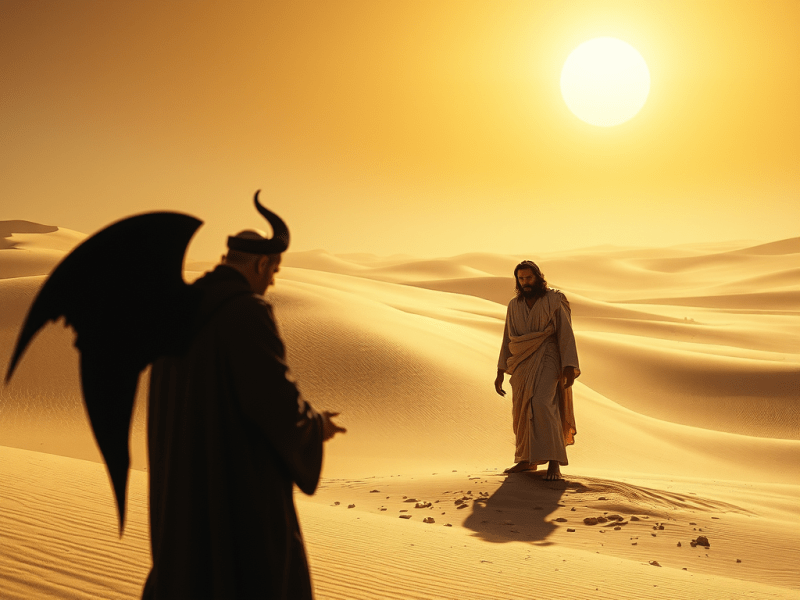
Jesus then rebukes Peter with harsh words that are dramatic and to the point: “Get behind me, Satan! You are a hindrance to me; for you are not on the side of God, but of men” (v. 23). The man, whom Jesus had earlier called ‘rock’, he now gives him another name: Satan! Jesus considers Peter a hindrance in escaping the cross, which would have meant avoiding the Father’s will. The Father has given his Son a mission to bring about the salvation of the world, which can only be done through his Passion. For this reason, Jesus responds to Peter in those harsh terms. Yet, notice that he doesn’t take back what he said about Peter being rock. Jesus continues to believe in Peter; he will form him. Jesus tells Peter that if he does not believe in Him as the Suffering Servant, who will bring life to the world, then he cannot lead the Church–indeed, he will be an obstacle, a stumbling stone to His path. The only way that Peter will become a rock is to walk through this conflict with Jesus.
At this point in Matthew’s Gospel, the Teacher turns to those who were following Him, and clearly presents the path to follow: “Whoever wishes to come after me must deny himself, take up his cross, and follow me” (v. 24). Just as Peter resisted, the temptation today, too, is that of wanting to follow Christ without the cross. We want to follow Jesus on our terms, not his.
How can we make sense of this stubborn cruciform pattern of Christianity? We can only do so if we remember that the Way of Jesus is based on God’s very nature, which is love. And that there cannot be true discipleship without pouring oneself out into others–by giving one’s life away through the sharing of our gifts, talents, and time. We cannot let ourselves be absorbed by the vision of this world, but to be aware of the need and effort for us to walk against the current of our self- absorbed culture.
Jesus completes his conditions of discipleship by proclaiming ” whoever would save his life will lose it, whoever loses his life for my sake will find it” (v. 25). This does not mean a superficial, cosmetic change but a radical conversion, a reversal of a mentality and values where life is self-referential to where my life is about Jesus with no equivocation. And the only way we can follow Jesus is to take up our own cross. It is not just a matter of patiently enduring daily irritants and tribulations but of bearing with faith and responsibility that part of our journey, which entails suffering that the struggle against evil in doing the Father’s will entails. The life of a Christian is hard because it is a nitty-gritty fight against Evil which seeks to destroy us and our relationship with God, each other, and creation.
Thus, the task of “taking up the cross” becomes participating with Christ in the salvation of the world. That is Christ’s mission and as members of his mystical Body, the Church, that is our mission as well. The Cross, what hangs on the wall at our home or what we wear around our neck, is a sign that we wish to be united with Christ in lovingly serving our brothers and sisters, especially those who are most vulnerable and fragile. The cross is a holy sign of God’s Love; it is a sign of Jesus’ sacrifice, and when we make the sign of the cross or wear it on our body, we are publicly saying that we identify with Christ crucified, the Suffering Servant and that we follow his Way of generous self-giving. If we deny ourselves, take up our cross, and follow Jesus, we will experience authentic joy which is the infallible sign of God’s presence.
May the Blessed Virgin Mary, who was united with her Son at Mount Calvary, help us not to retreat in the face of trials and suffering that witnessing to the Gospel entails. Amen.


 WWW.DEACONJIM.BLOG
Leave a comment