2nd Sunday of Advent (B); December 10, 2023
Is 40:1-5,9-11. Ps 85. 2 Pt 3:8-14. Mk 1:1-8
Deacon Jim McFadden
Last Sunday we began Advent with the anticipation of Christ within our hearts and community at a deeper level. In this Sunday of preparation for Christmas, we focus on the itinerary of faith, which necessarily entails conversion. If we are going to welcome Jesus into our heart and soul at a more deeper level, we have to change the direction of our old way of living and thinking towards what we hold in esteem. As the prophet Isaiah reminds us, being an oracle for God, “For my thoughts are not your thoughts, nor are your ways my ways, says the Lord” (Is 55:8). This means that we’re being challenged to change the very way that we think and live. In the moral and spiritual life, to convert is to commit oneself to the Father’s will, turn away from evil to good, to avoid sin and to live out daily the Great Commandment.
And, this is what John the Baptist was teaching, who was in the desert preaching “a baptism of repentance for the forgiveness of sins” (Mk 1:4b). Receiving baptism was an outward and visible sign that one was embracing conversion. The people had listened to John’s preaching, they felt convicted in their old way of thinking and living, and had publicly decided to repent: to turn their lives over to God. That baptism occurred with the immersion of water; but, while that was a good start, it was useless because it lacked power; left to themselves they would revert to their old way of thinking and living. To repent and change one’s life requires another transformative power.
Once we repent, admit our shortcomings, once we smooth out the roughness of our pride and self-absorption, then and only then, can we go to the next level and embrace the itinerary of faith, in which we make room for Jesus in our lives as the very center and Ultimate Concern of our lives. Jesus has come to liberate us from our “old thoughts and ways” which inevitably lead to an empty life. How is this liberation going to happen? John puts it this way: “I have baptized with water; he will baptize you with the Holy Spirit” (vs. 7-8). Isaiah and John the Baptist started the process of conversion and repentance. The Savior whom we wait for in hopeful anticipation, he will transform our life to its very core through the power of the Holy Spirit, which is the power of divine love.
What will this radical transformation look like? To begin with, we make an act of intention to exclude sin from our life. While this is a process, which is why Jesus gave us the Sacrament of Reconciliation, we reject everything that is connected to sin. If it doesn’t come from God, we’re not going to entertain it; we’re not going to dabble or play with it. We can’t have it both ways: we can’t operate out of a worldly, self-referential mentality in which I pursue the goods of the world with an excessive preoccupation for comforts and security, for an excessive esteem for pleasure, for an excessive attachment for power, of being in control of my life and that of others. That is why John the Baptist was presented to us as an austere person, who rejected the ephemeral and superficial and who sought the essential in the very way he dressed and his simple diet. This is the first step of conversion: detachment from sin and worldly attachment.
But, the itinerary of faith continues to the next level: i.e., the search for God and his kingdom in our ordinary experience. Abandoning the excessive desire for the goods of the world is not an end itself, but is a means of obtaining something greater: namely, the Kingdom of God, communion with God, friendship with God. It really is an either-or choice: we can’t love mammon and God at the same time. As Jesus reminds us, “No one can serve two masters; for either he will hate the one and love the other, or he will be devoted to the one and despise the other. You cannot serve God and mammon [money, possessions, fame, status, or whatever is valued more than the Lord], Mt 6:24-26).
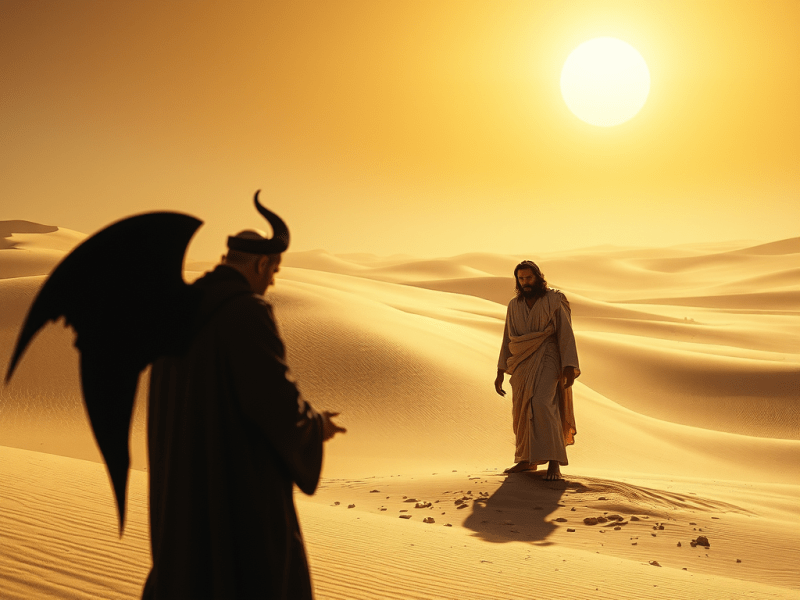
This is not an easy task, but is a daily commitment and practice because the Prince of Darkness is always at work trying to draw us away from our Lord. As Peter cautioned us, “Be sober and vigilant. Your opponent the devil is prowling around like a roaring lion looking for someone to devour. Resist him, steadfast in faith, knowing that your fellow believers throughout the world undergo the same sufferings” (1 Pt 5:8-10.) While temptation seems to be relentless, we don’t want to give into discouragement or give into it. But, If we settle for a mediocre interior life, we can gradually sink into apathy, lukewarmness, and lack of fervor for loving our Lord.
So, we need to remind ourselves that conversion is a grace: no one can convert by their own stiff-upper lip resolve, but grace is something that the Lord gives us and thus we need to emphatically ask God for it every day! We need to ask God to convert us so that our mind and heart conform to His; we need to open ourselves to the utter beauty, goodness, and tenderness of God. He loves us so much that he sacrificed his only begotten Son for our salvation. This is what drives conversion: God’s love, which wants to transform us into God’s very being.
Let us ask, Mary Most Holy to help us separate ourselves from sin and worldliness, in order to open ourselves to God, to his Word, to his love which restores and saves. Amen.
Reflection Questions
- Do you accept the challenge of the prophet Isaiah to change the way you think and live?
- How do you strive to separate yourself from sin and worldliness (i.e., preoccupation with the goods of the world)?
- How do you intentionally and actively search for God and his Kingdom in your ordinary experience?


 WWW.DEACONJIM.BLOG
Leave a comment