2nd Sunday of Advent (C); December 8, 2024
Bar 5:1-9. Ps 126. Phil 1:4-6,8-11. Lk 3:1-6
Deacon Jim McFadden
The beginning of Luke’s gospel chapter 3 seems a bit pedestrian. As we plow through all the details of rulers and their territories, we feel a bit impatient with all this historical detail. If Luke was doing stand-up, some would be heckling him to get on with the big announcement of John the Baptist and his ministry. But these are necessary details. John’s call to repentance challenges the oppressive structures. These rulers—Tiberius Caesar, Pontius Pilate, Herod and his brother Philip, and Lysanias—were all responsible for perpetuating a political, economic, and social systems that were oppressing people. More to it, he includes the high priesthood of Annas and Caiphas, who were complicit in the oppression. Luke is naming names! He is fixing their place in history along with their responsibility for promoting an oppressive false kingdom. Rather than using these details to praise these political and religious leaders, Luke instead indicts them.
The word of God did not come to those who enjoyed power and prestige, but came to John who turned his back on an empire and a religious system that abetted it. This seems to be God’s modus operandi as he prefers what is small and lowly. Redemption will not begin in Rome, Jerusalem, or Athens but in the wilderness, away from the halls of power. This paradoxical approach tells us something for our time: being powerful, well-educated, or famous is no guarantee that one is pleasing to God. Indeed, they could get in the way as those things could lead to pride and self-absorption, leading us to worship ourselves rather than Him.
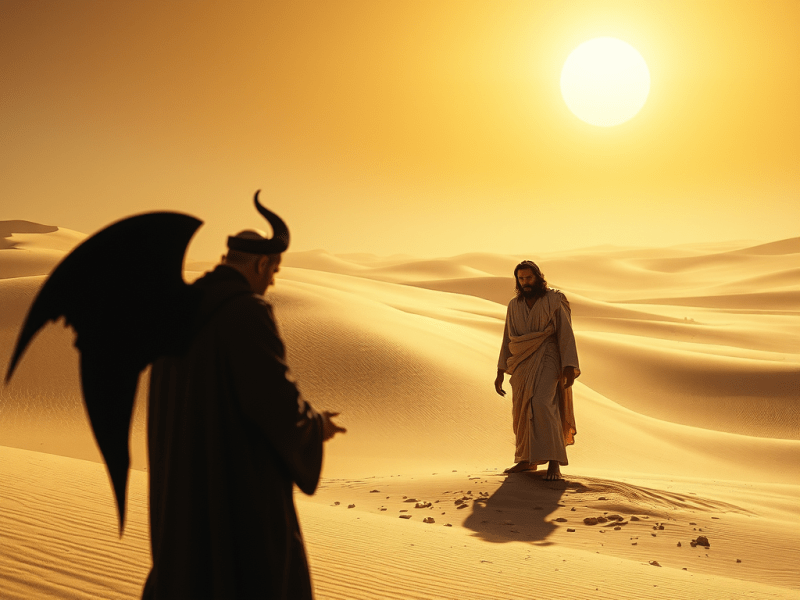
John’s detachment from power led him to the desert which allowed him to hear the message in ways those associated with power could not. John the Baptist—the Precursor—prepares the coming of Christ in this poor, inhospitable and dangerous place. Usually, when one wants to make a big announcement, one taps into the major cultural centers where one could be readily seen and connect with large crowds. John, on the other hand, preaches in the desert—an arid, empty waste, stretching as far as one could see. It’s a situation that seems empty, irredeemable, hopeless with no way out. But that is where John prepares the way showing that there is no place or condition that God will not visit.
And, how does John prepare the way for the Lord? What does he preach? We hear, “He went throughout the whole region of the Jordan, proclaiming a baptism of repentance for the forgiveness of sins” (Lk 3:3). John is calling us to repentance, to convert. The Greek word for that is menanoen, which consists of two parts: ‘meta’, which means “beyond” and ‘noen’, “to go beyond our normal thinking”. John is challenging us to go beyond our usual ways of thinking, to go beyond our conventional world view. He’s calling us to let go of that old consciousness which reduces everything to ourselves, that we are self-sufficient. Or, those self-centered ways of thinking marked by rigidity and paralyzing fear that says, “I’ve always lived this way; why should I change?” John shakes us out of complacency with the words of the prophet Isaiah:
“Prepare the way of the Lord,
Make straight his paths.
Every valley shall be filled
and every mountain and hill shall be made straight,
and the rough ways smooth,
and all flesh shall see the salvation of God” (vs. 4-6).
What’s he saying? His job is to prepare for the mighty coming of the Lord and his job is to build a highway that will facilitate his arrival. We’re not talking about a minor tweaking along the edges, but John’s message channels us to a moral imperative of a major course correction. Make no mistake: a change is coming– a revolution is on its way in which we relinquish our old consciousness and take on the Mind of Christ. Before we can open our heart and mind to receive the Good News of salvation, we have to let go of our slavery to sin in which we operate from that self-referential, safe, secure, comfortable stage that we’ve created for ourselves that keeps us in, but God out.
Brothers and sisters let us not settle for “trimming” the mountains that block the coming of the Lord or ignore the “rough ways” because of the demanding work needed to make them smooth.
People of God, let us embrace repentance/metanoia this Advent. Let us tear down the barricades and obstacles that impede our conversion and surrender to our Lord Jesus. He alone can fulfill all the hopes of men and women, young and old. Let us ask the Virgin Mary, who is the Mother of the Church, who is our Mother, to show us how to do this. Amen.
Reflection Questions:
- God’s modus operandi seems to prefer what is small and lowly. How is that realized in your experience?
- John’s detachment from power led him to the desert, which allowed him to hear the Word of God. Do you welcome this ‘desert experience’?
- Metanoia means to let go of our old way of thinking and living. How do you experience repentance?


 WWW.DEACONJIM.BLOG
Leave a comment