Solemnity of the Immaculate Conception; 12-08-2025
Gn 3:9-15,20. Ps 98. Eph 1:3-6,11-12. Lk 1:26-38
Deacon Jim McFadden
Today’s readings present us a stark choice. In the first reading from the book of Genesis, there is a man, who, at the very beginning of his origins, says “no” to God. And, in the Gospel reading there is Mary, only about 14 years of age, who, at the Annunciation, says yes to God. What both readings have in common is that God is the one who seeks mankind, which is what He is doing today with you. God seeks you to be in intimate communion, in a loving interpersonal relationship that will not only energize your life as it unfolds but will last forever.
We have a choice: we can say “no” or we can say “yes.” In the first case God goes to Adam, after he had sinned and asks him: “Where are you?” (Gn 3:9). Adam responds: “I hid myself” (v. 10). In the second case, God goes to Mary, without sin, who responds: “Behold, I am the handmaid of the Lord” (Lk 1:38). Do you see the difference? “Here I am” is the opposite of I hid myself. Here I am opens oneself to the loving presence of God, while hiding from God closes, isolates, causes one to be alone with oneself in a self-imposed prison.
Brothers and sisters, Here I am may be the key phrase of our life. It marks the passage from what Urs von Balthasar called moving from the horizontal ego-drama to the vertical Theo-drama, where one ascends to and falls in love with God. Rather than live the life of egocentric self-absorption, Here I am is simply being available to God in this moment in this place. It is a cure for selfishness, the antidote to a dissatisfied life in which we bounce from one distraction to another abetted by social media in which we stay glued to our electronic devices for hours on end.
Here I am is the humble recognition that my is not about me, but that God counts more than me and that His love is more precious than my physical life. Using gambling parlance, it is placing your bets on God; indeed, it is doubling-down on God in which we don’t hedge our bets. Since we’re no longer in control, we’re now open to surprises as our journey into the mystery of God unfolds. That is why Here I am is the highest praise we can offer God. People of God, why don’t we begin our days with a Here I am, Lord. What a wonderful way to start our day: “Here I am, Lord, let your will be done in me!”
Mary adds: “Let it be to me according to your word.” Notice she doesn’t say “let it be done as I want,” but “as you will.” Mary does not place restrictions on God; she doesn’t go along only if it is convenient or corresponds to her agenda, plans, or program. She doesn’t think, “Okay, I’ll give God some of my allegiance, some of my time, some of my commitment. But, after that I will do pretty much what I want.” No, Mary doesn’t love the Lord just when she feels like it, off and on. She lives by entrusting herself to God in all things and for all things. She trusts God in everything because God can do everything in our lives if we say “yes” to His will.
But, if we say “no” to God just as Adam did, I think God suffers when we reject Him. By our baptism, we have been initiated into the mystical Body of Christ, the beloved Son of the Father. When we reject God, the Body of Christ is wounded; God suffers as a result of our rejection. So, if we follow Adam’s example, we will respond in the same way: “I was afraid; I hid myself.” We hide from God by not engaging in meaningful daily prayer; we avoid Him by not fulfilling our Sunday obligation in participating at Holy Mass; we stay away from Him by not recognizing Him in the most marginalized and vulnerable people.
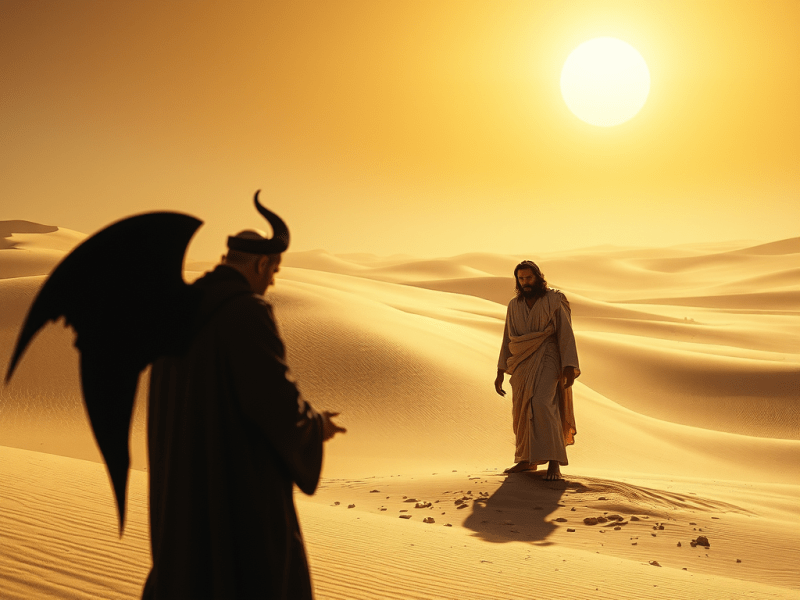
Why do we reject God? I think it comes down to trust. We think that if we give ourselves completely to God, that he may send us some trial we can’t handle. Or, that if we live according to His will, we will be deprived of our freedom. Or, when life really gets hard, God will be MIA—that He will abandon us. But, this is a ground floor mistake. It goes all the way back to Genesis 3, the temptation of the Devil, who wove mistrust in God. Mary overcomes this first temptation with her here I am. And, today we look at the beauty of our Blessed Mother, who was born and lived without sin, ever docile to the Father’s will and transparently present to God.
This does not mean that life was easy for Mary. Being with God does not mean that our problems, conflicts will be magically resolved. The conclusion of today’s Gospel passage recalls that “the angel departed from her” (v. 38). He departed; that’s a stark description. The Angel left the Virgin alone in a very difficult situation. She knew the special way in which she would become the Mother of God, but no one else would know. She’d be an engaged teenager in a small town of Nazareth. Can you imagine how rumors would fly, even without the internet! But faced with uncertainties, faced with problems, Mary placed her trust in God. Yes, she is left alone by the Angel, but she believes that God still remains with her and that’s enough: she trusts in God; she never stops trusting. She is certain that with the Lord, even in an unexpected way—even when her Son is being brutally crucified—that all is well, everything will be fine.
This is a wise approach: life is hard—problems, conflicts, loss, rejection, misunderstandings are just part of our landscape. When one problem emerges, another one will take its place. It’s like the Gildna Radner SNL character Rosa Anna Dana: “It’s always something!”. But, by trusting in God and entrusting everyday to God: “Here I am” becomes our daily prayer. Let us ask the Immaculate Conception for the grace to live this way. Amen.
Reflection Questions:
- What is it like when you’ve hidden from God?
- Do you strive to live your day by saying to God, “Here I am”?
- Mary said to the angel, “Let it be to me according to your word.” Do you strive to live accordingly?


 WWW.DEACONJIM.BLOG
Leave a comment