3rd Sunday of Ordinary Time (A); January 25, 2026
Is 8:23-9:3. Ps 27. 1 Cor 1:10-13,17. Mt 4:12-23
Deacon Jim McFadden
Usually, Catholic homilists dive right into the Gospel to unpack its meaning for the community. What I’d like to do is to reflect upon our first reading, which is the take-off point for Matthew’s Gospel in which he describes a land that is very dark and foreboding, but that a great light has arisen. What is significant of the land of Zebulon and Naphtali ? For most of us, we just skim over it to get to the account of the Call of the First Disciples.
These obscure Old Testament references will shed light on the Call to Discipleship, however. Now, by way of biblical background, Israel the country was divided according to Tribes, who were derivative of the Twelve sons of Jacob, who was a son of Isaac and the grandson of Abraham. So, to the South you have the area of Benjamin and Judah near Jerusalem and a smattering of 10 Tribes to the North. In the region of the Sea of Galilee, which we associate with Jesus, there were tribal areas of Zebulon and Naphtali, named after two of Jacob’s sons.
It was under the reign of King David, who would become the prototype of the Messiah, who united the Twelve Tribes into one Kingdom. This nation would be a beacon of light to the other nations, a sign of God’s presence in the world. However, during Israel’s history, following the death of David and his son Solomon, there ensued with some exception (cf. Josiah), a rogue’s gallery of very corrupt kings, which put Israel under great stress. The first trauma occurred in the 9th century b.c. when the Assyrian hordes swept over the Golan Heights into the Northern Kingdom and carried off members of these ten Tribes into Exile, including the Tribes of Zebulon and Naphtali . In the 6th century b.c. a more dramatic occurrence happened when the Babylonians swept into the southern region of Judah, crushed the Kingdom, deposed the King, razed Jerusalem to the ground, and destroyed the Temple, and sent the people into Exile. At this point, the Jews had lost everything. All of this happened to a nation that’s supposed to a beacon of light to the other nations. Now, they are crushed, divided, and in Exile.
But, as the prophets often do—after all, they are spokespersons for God!—in the face of abject loss, Isaiah offers a bold prediction of hope. In the land of darkness, in the place of loss and devastation, light will shine. Listen: “the people who sit in darkness have seen a great light, on those dwelling in a land overshadowed by death light has arisen” (cf. Is 9:1 and Mt 4:16).
Then he speaks of a military/political turn-around: “For the yoke that burdened them, the pole on their shoulder, and the rod of the taskmaster you have smashed, as on the day of Midian. For every boot that tramped in battle, every cloak rolled in blood, will be burned as fuel for flames” (Is 9:3-4).
What is Isaiah referring to? He’s referring to the invasion of the Northern Tribes, carrying the people into Exile. He’s saying the people will return, they will turn back their oppressors; they will be liberated; hope hangs on.
This is Israel’s longing for the end of oppression, which began with the Exodus Experience; this is them longing for the return of the Tribes.
Okay, was this hope realized in the lifetime of the prophets? Nope. Was it realized later in subsequent centuries? No. Nevertheless, Israel remained oddly hopeful. They believed that one day, Yahweh would smash the rod of the taskmaster, he would overcome Israel’s enemies, and light would shine from a dark place.
Once you see this Messianic theme, you begin to see hints of it everywhere in the Old Testament. We hear from Ezekiel, for example, who said that God would abandoned his Temple because of Israel’s infidelity, but that he would restore it to its former grandeur. Did it happen in Ezekiel’s lifetime? Nope. Did it happen centuries later? No. And, yet, Israel hoped. Someday Yahweh would gather the Ten Lost Tribes of the Northern Kingdom; one day the light would shine into the darkness.
Most famously, the prophet Nathan said that the house of David would last forever (cf. 2 Sam 7:14-16 for details). David’s line would last forever! Really?! Nope, the Davidic line of kings ended with the Babylonian Exile; they had a good run, but it hardly approximated an eternal dynasty. But, the House of David still persisted. The people hung onto Nathan’s prophesy that David’s dynasty would be eternal. They kept alive this hope despite the fact that the Davidic kings no longer existed. They continued to wait and to watch.
These were some of the biblical texts that Israel sought to understand their destiny.
Okay, against all of this background, we come to understand Jesus. Keep in mind that Matthew was a Jew and was very attentive to the Jewish heritage. After the incredible experience of the death and resurrection of Jesus, they went back to these prophesies and expectations. Even though it looked like none of the prophesies ever came true in a literal way, they did come true on a grandeur scale. Now, we begin to understand the Gospels and Paul’s writings because they were shaped by Israel and sought to understand the fulfillment of Israel’s destiny.
Let’s look at the Messianic hopes. Did Yahweh return to His Temple? Ezekiel said he would: he left, but he would come back. The Early Christians said that the destruction of Temple in 70 a.d. by the Romans would be replaced by a new Temple, the Body of Jesus who would become the epicenter of right praise and worship. Jesus’ crucifixion and resurrection would become the definitive center of worship. The Temple has shifted from a place to a Person: Yahweh’s glory did indeed return to the holy Temple.
How did Nathan’s prophesy that David’s line would go on forever? That belief seemed to be hopeless, but when the only begotten Son of God became human in Jesus, Yahweh has now pitched his tent among us as a member of the House of David. That’s why it was important for the Early Christians to view Jesus as the Son of David, which is why he was born in Bethlehem, David’s home.
Remember what the Archangel Gabriel said to Mary at the Annunciation that her son would be “…great and will be called the Son of the Most High, and the Lord God will give him the throne of David his father” (Lk 1:32). The angel would confirm Nathan’s prophesy.
All of this brings us back to the prophesy taken from Isaiah. Would Israel’s enemies be vanquished? Would the Tribes be gathered together into one Kingdom? Yes—said the first Christians.
It happened when this obscure prophet who came not from Benjamin or Judah or Jerusalem to the South, but he came from the periphery, this little town of Nazareth in the region of Galilee. Listen: “He left Nazareth and went to live in Capernaum by the sea, in the region of Zebulon and Naphtali, that what had been said through Isaiah the prophet might be fulfilled” (Mt 4:13-14).
How did the Early Christians read Jesus? They weren’t expecting the Messiah from the part of the world. But, they read him in light of the great Isaiah prophesy: land of Zebulon and Naphtali—land of gloom and oppression, and exile. From you will come a Light.
Brothers and sisters, who is the chief oppressor who influences the oppressors of the world? It’s that Dark Power with whom this prophet from Nazareth will do battle with. What’s the yoke that burdens us? It’s the yoke of sin and death, which the prophet from Zebulon and Naphtali would smash on Mt. Calvary, who would swallow up our dysfunction in the greater mercy and compassion of God.
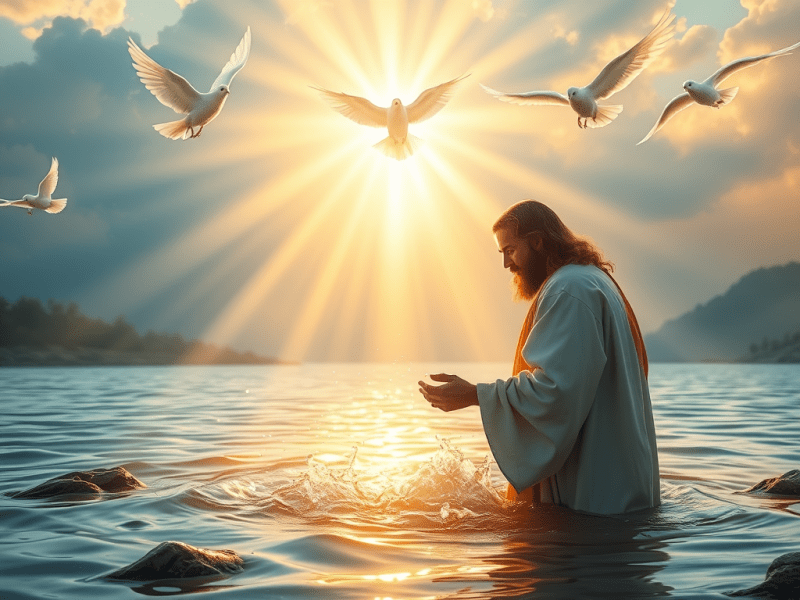
The people who walked in the darkness have seen a great light, the one from Nazareth who declared himself the light of the world. That’s what Matthew saw in Isaiah’s ancient prophesy, which seemed hopeless, hope against hope has come true in Jesus—the prophet of Zebulon and Naphtali.
So, what is the upshot for us today? We want to disengage from the Assyrians of our day and join the army of the Prince of Peace. We want to become a brother and sister to Peter, Andrew, James, and John—those first disciples called when he emerged from the land of Zebulon and Naphtali as Light to the world. May our Blessed Mother help us bring the Light of Christ to the world that so desperately needs it. Amen.
Reflection Questions:
- Does our current political/social situation resemble the land of Zebulon and Naphtali? How so?
- The Israelites longed for the end of oppression. Does this resonate with you? How do you deal with the Dark Powers of our time and place?
- Jesus brings Light into the Darkness to the world that desperately needs it. What role do you play in this endeavor?

 WWW.DEACONJIM.BLOG
Leave a comment