Ex 12:1-8, 11-14; 1 Cor 11:23-26; Jn 13:1-15
Deacon Jim McFadden
Tonight is often called the feast of friends, the friends of God. Sounds good, but there’s a stark challenge: to be friends of God, we have to live a certain way. Along this theme, tonight is also a remembrance of Who God is and who we are; of being full, participating members of the Body of Christ, the Church, who gather around the story (the word) and the bread (the Eucharist) and become what we eat. We become Christ to the world.
The Jews begin their Passover ritual with a story, which is one of terror and death, when the Angel of God passed over the doorways marked with the blood of the sacrificed lamb, and also about the wonder and incredible works that God did for the Chosen People in leading them out of the oppression of Egypt into the Promised Land of justice and peace.
The gospel continues the story. But, in John’s gospel there is no commentary on the institution of the Eucharist. Instead, there is a
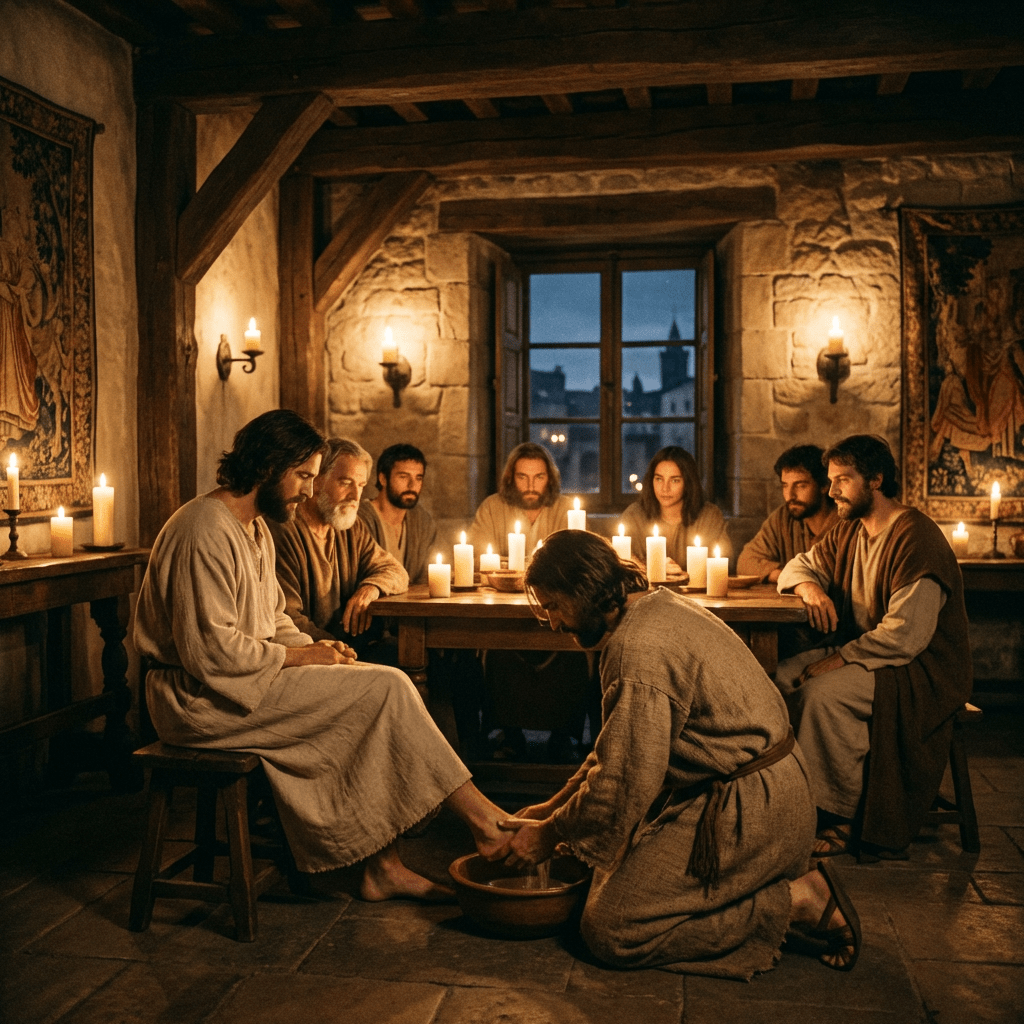
ritual narrative of the Washing of the Feet, which shows in action what the Eucharist is about.
The story is simple. Jesus intends to show his disciples how much he has loved them before he leaves them. He will love them and us to the end, as he passes through the doors of bloody death returning to his Father. First, he begins by taking off his outer garments, which signifies revelation. Just as in Mark’s gospel when the temple is split asunder, when we gaze at Jesus without his outer garments, we are going to see God–God incarnate in a way that we could not imagine. He stoops, bending before them, and washes their feet. It all comes down to feet—walking the Earth and everything feet meets has significance. God wants to help us walk the Earth; He does not want to take us out of the Earth but to help us on the journey; to refresh us on our way. What the divine reality is about is caring for us. He’s going to give himself to us by washing our feet. That’s what God does—we are constantly receiving from God.
This all too much for Peter, our first pope, who is a symbol of the Church. When Jesus comes to him, he says incredulously: “Master, are you going to wash my feet?” (Jn 13:6) Peter recognizes Jesus as Lord, but he’s
bothered by what He is doing. Peter just doesn’t expect the Messiah to act like this, which violates some pecking order. Peter would like to reverse the roles, to give himself to some transcendent God in which he’d make a lofty sacrifice. Peter would like to wash Jesus’ feet because his idea of God is one who is unapproachable. For Peter the Anointed
One just doesn’t do this kind of stuff. He insists that “You will never wash my feet” (v. 8a). He says that because there’s some resistance receiving from the divine Who is pouring Himself into us. Something is blocking Peter quite badly. And, it’s not just Peter who’s jammed up.
Jesus, in turn, resorts to a threat: “Unless I wash you, you will have no inheritance with me” (v.8b). There are some things God cannot do; He cannot make us love Him. What God can do is to support his beloved children as they walk the Earth. God is not some transcendent power that we can call upon to rescue us. God is the One who supports our journey–Who’s right in the thick of it with all of its messiness and heartache. If we don’t allow God to minister to us, to love us, if we don’t let God in, then He can’t do things for us.
Jesus is saying to Peter, to us: “This is the only way I can get into you. You can’t inherit me, unless you let me do this for you. You have to let me be your ground, your foundation, your support. You have to receive from me; you can’t keep isolating yourself from this basic act of
giving myself to you. I can’t relate to you any other way: I came so that you may have life and have it more abundantly; I have no other trick—
this is it.”
The Washing of the Feet, the Eucharist, is challenging us to change our consciousness to the fact that at every moment of our existence, we are in the constant act of receiving Life from beyond ourselves. Life, Goodness, Truth, and Beauty are constantly being given to us. We are in a relationship with a loving God Whose nature is unconditional self- gifting. The question is do we want to be open to this relationship? Do we want to move out of our isolation and be a person for others? Do we
understand that we are continually the recipients of a divine energy…of divine grace. Do our hearts overflow with gratitude?
“So when he had washed their feet (and) put his garments back on and reclined at table again, he said to them, “Do you realize what I have done for you?” (vs. 12). When Jesus took off his outer garments, he was the power of God; when he puts them back on and returns to the table, he is going to instruct us that if we live in this flow, that we should act a certain way toward each other. “Amen,, amen I say to you, no slave is greater than his master, no messenger greater than the one who sent him. If you understand this, blessed are you if you do it” (vs. 16-17).
What’s going on? Jesus is changing the paradigm: the day of Master and Lord are over. If Jesus is a Master and Lord and he acts this way, then how do we act toward one another, especially the poor and most vulnerable in our Church community and society? The process of domination and control we have toward each other is over. It has been replaced by service; to be a member of the Body of Christ, the Church, is to be a servant. It’s as simple as that.
Consequently, the new model is one of a mutual flowing of life one into the other—some type of mutual support. The Old Consciousness of one person bending to the will of another is over. If we begin to receive mercy from God, we will give to others who are in need because that’s the nature of God’s grace. We will wash each other’s feet beginning with the least of Jesus’ brethren! Amen.
 WWW.DEACONJIM.BLOG
Leave a comment