Saints Simon and Jude: Apostles; October 28, 2026
Eph 2:199-22. Ps 19:2-5. Lk 6:12-16
Deacon Jim McFadden
Have you ever been seriously ill—physically or mentally? Have you ever been anointed during a celebration of the Sacrament of the Anointing of the Sick? If you said “yes” to the first question, I hope you also said “yes” to the second one.
In the old days before Vatican II, the sacrament was not part of the normal Catholic experience, but was done privately in a hospital room or a bed at home for those close to death, which is why it was called “Extreme Unction”. The thrust of the Second Vatican Council was to renew the Sacrament and to make it more readily available and to extend it—within reasonable limits—even beyond cases of mortal illness.
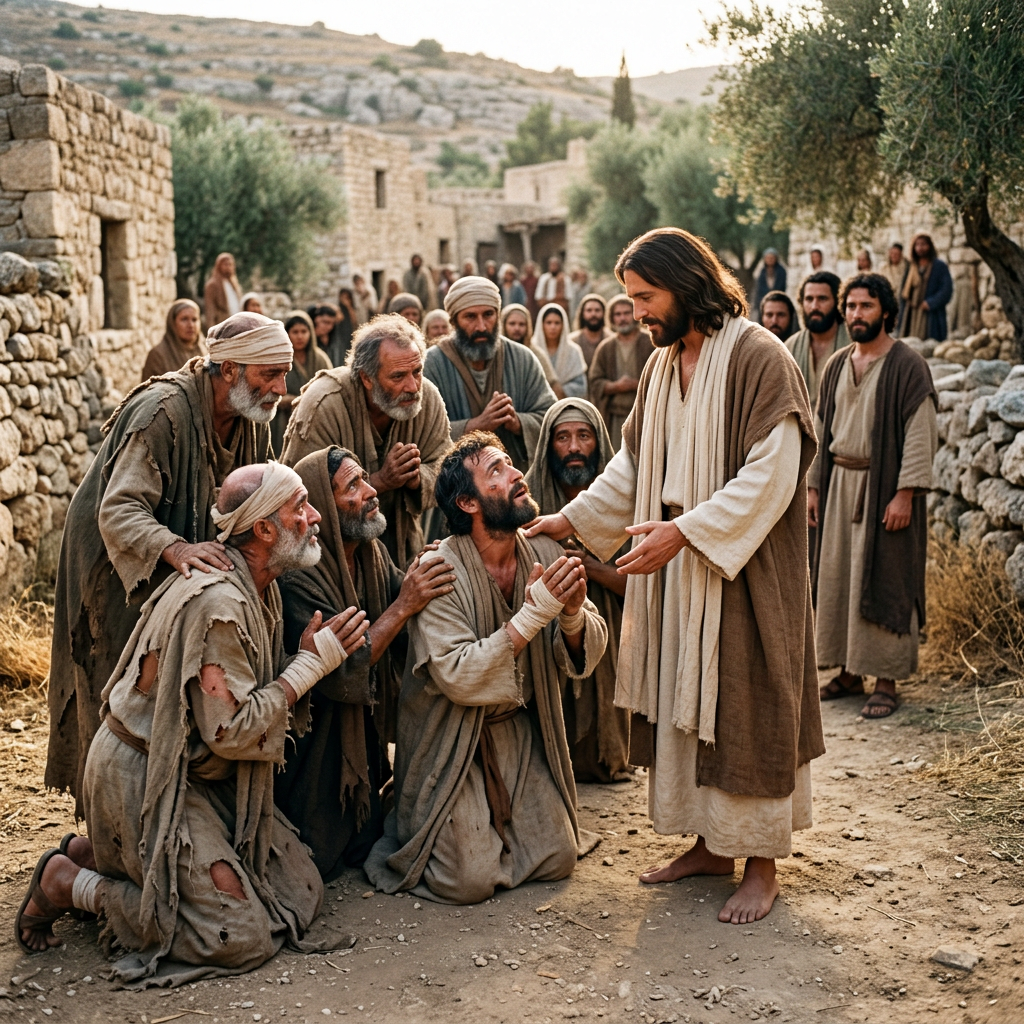
As members of the mystical Body of Christ, the Church, we have the same Mission as Jesus and we’re called to do what Jesus did. Throughout the Gospel we read of Jesus’ concern for the sick. Healing was essential to his Mission and by extension of the disciples. In today’s Gospel we hear that Jesus encountered ten leprous men who pleaded, “Jesus, Master, have mercy on us.” And, what did He do: he healed them. But, more to it, they had to cooperate with Jesus the Healer because “Your faith has made you well.”
That’s what the Sacrament of Anointing of the Sick does: it brings healing
and sickness is more than bodily illness. There is a holistic unity of body, soul, and spirit. That’s why the principal causes or manifestations of illness sometimes may not be physical but mental, emotional, or spiritual. “Perfectionism” in academics, sports or demanding professions may result in psychosomatic symptoms. When a person decides to withdraw from excessive drinking or drug dependency, they may experience not only physical discomfort but anxiety or depression as well. Those who go through a contentious separation or divorce can cause gastro-intestinal discomfort. Being rundown from the demands of work can make one more susceptible to the flu.
Today we are experiencing the extreme polarization within our society which can create tensions within families, communities which can effect our mind and body and make us anxious about our future, especially for our children and grandchildren.
All of these conditions and more can move us to ask for the healing touch of Christ Jesus in the Sacrament of Anointing, which involves a different kind of healing that what we get from a prescription obtained from the pharmacy or a surgical intervention. Sacraments are acts of faith; they grace the whole person—body, soul, and spirit. In the blessing of the oil at the Chrism Mass we ask God to “send the power of your Holy Spirit, the Counselor, into this precious oil…Make this oil remedy for all who are anointed with it; heal them in body, in soul and in spirit, and deliver them from every affliction” (Pastoral Cure of the Sick, #123.).
The question arises: who gets healed? Most priests will testify that healing always takes place, which is not restricted to a mere physical cure. Sacraments are celebrations of faith, expressions of who we are before God, as his beloved daughters and sons. This understanding of the Sacrament together with the realization that we are more than our physical bodies, lead us to a deeper understanding of the Sacrament. Again, the Second Vatican Council has reminded us: “The purpose of the sacraments is to make people holy, to build up the Body of Christ, and finally to give worship to God” (Liturgy, #59). The Sacrament of the Anointing of the Sick accomplishes this by helping us gain insight into the religious meaning of human suffering which is redemptive.
The Sacrament does not remove the mystery of human suffering. Yet its celebration, especially within the context of Holy Mass, gives us a window into the mystery of a loving God. Our loving Father raised up His crucified Son to display his sacred wounds, sitting Him triumphant at the Father’s right hand. He’ll do the same with us as we experience His Divine embrace now and forever. Amen.


Leave a Reply