18th Sunday in Ordinary Time (A); August 2, 2026
Is 55:1-3. Ps 145. Rom 8:35,37-39. Mt 14:13-21
Deacon Jim McFadden
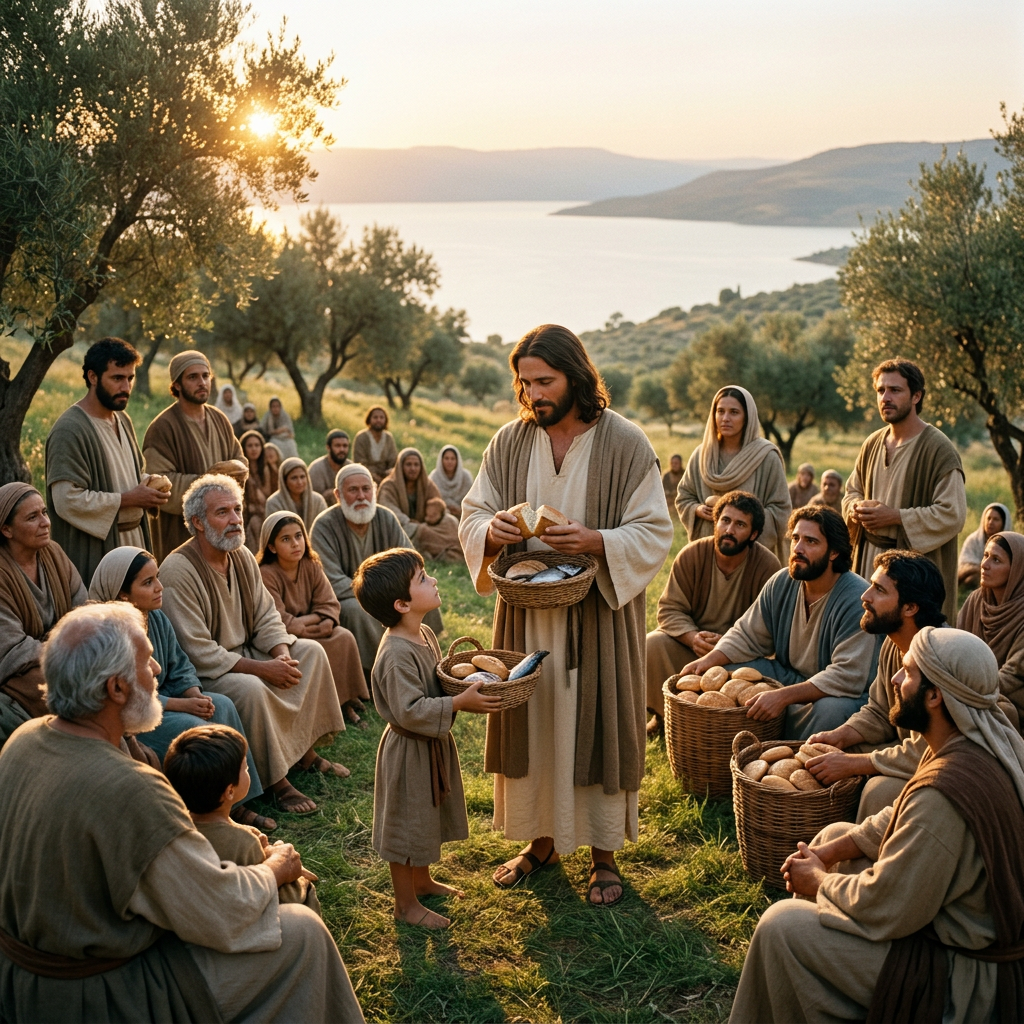
This Sunday’s Gospel presents us the miracle of multiplication of the loaves and fishes. The account illustrates two opposite ways of thinking and behaving: namely, do I have compassion for others or do I look away? If we’re going to follow Jesus, then we have to embrace his logic, which means we take responsibility for others.
The scene takes place in a deserted place, where Jesus had retired with His disciples. But being a popular magnetic figure, purported to be the long awaited Messiah, the people found Him so as to listen to Him and be healed. Indeed, His words and the way he related to them restored their hope. As the day wound down, they were still there; they weren’t going to go away. His disciples, being practical men, encouraged Jesus to send them away so they could fend for themselves. Jesus looks them in the square of their eyes and says, “You give them something to eat” (Mt 14:16). Can you imagine the disciples faces! Jesus was aware what he was about to do, but along with the pending miracle, Jesus wanted to change their attitude: to go from “send them away” or “let them fend for themselves” or “let them find something to eat” but rather “what does God’s providence challenge us to share?” What we have are two polar opposite ways of relating to people: Jesus’ way of thinking grounded in compassion or our practical, self-referential way of indulgence. God, speaking through the prophet Isaiah reminds us of this tension that “For your thoughts are not my thoughts, nor are our ways my ways, says the Lord” (Is 55:8).
Jesus comes from a different logic. Jesus is going to use this situation to teach his friends, both past and present, about God’s logic. And, what is God’s way of thinking? The logic of taking responsibility for others. The logic is not washing one’s hands, of looking the other way. That “let them take care for themselves” is simply contrary to who Jesus is and the One who sent him.
Why’s that? Jesus’ logic comes from God’s nature, which is Love. God is for-giving of himself; God is eternally generous as he is always giving himself away. That’s why Jesus first instinct is to come from sharing. Being indifferent to the plight of others, especially the most vulnerable, is not the way of Jesus. That means we cannot be self-referential and follow Jesus at the same time.
Stuck in their old mindset, the disciples pout that “We only have five loaves and two fish. How’s that going to work with this throng of thousands of people?” They were basically saying to the Lord, “Get real!”
Undaunted, Jesus said, “Bring them here to me” (vs. 17-18). He presses forward, taking, giving thanks, and gives the pieces to the disciples to hand out the loaves and fishes to the crowds. There was not only enough, but there was plenty left over for thousands of people. What is going on here?
Brothers and sisters, what is on display in this Gospel passage is God’s compassion and sharing, both of which come together in the Eucharist. At Holy Mass, Jesus just doesn’t give us ordinary bread, but he gives us the Bread of Eternal Life: he gives himself, offering himself to his Father out of love for us and our salvation. So, when we receive him, we are also embracing his compassion and sharing, which means we take responsibility for our brothers and sisters. We, in turn, become the Bread of Life to the world: we share with others what we have received in such abundance.
People of God, do we experience compassion when US Aid to developing countries is slashed resulting in hundreds and thousands of deaths this year alone and 10 million over the next decade, according to Lancet magazine? Do we feel compassion about war especially if it is unjust or the slaughter of 70,000 people in Gaza, mostly women and children? Are we indifferent to the genocide that is happening in Sudan? Do we feel compassion towards these people? Are we capable of feeling compassion towards them. Are we capable of suffering with them or do we look the other way, saying “America First” and let them “fend for themselves”?
May Mary Most Holy help us to walk the path of compassion, which is the journey of fellowship and solidarity, which is essential as we face the suffering in this world, especially in these tragic moments. Our journey begins with God and returns to God. Everything must be integrated into that truth. Amen.
`


Leave a Reply