One of the Highest & Most Demanding Expressions of Love
23rd Sunday in Ordinary Time (A); September 6, 2026
Ez 13:8-10. Ps 95. Rom 13:8-10. Mt 18:15-20
Deacon Jim McFadden
If there is one absolute in our secular culture today is non-judgmentalism. The basis of that implicit bias is that there are no universal, absolute, objective standards that apply to all people at all times in every situation. All moral propositions are subjective and culturally relative. What follows is that you have your understanding of the truth and/or correct moral behavior and I have mine. Since there are no autonomous standards for right moral behavior, it all comes down to personal preference. My truth is as good as yours, so what right do you have to judge me? If you do, you are an intolerant moral bigot. Some people from a religious background will try to defend this point of view by citing Jesus’ famous enjoinder: “Judge not you will not be judged” or Pope Francis famous query, “Who am I to judge?”
But what should be clear from all three of today’s readings is that we can point out another’s moral failings using an objective standard–indeed, Jesus does it all the time! The challenge is how we should navigate judging behavior while loving the other person? Our second reading from St. Paul’s letter to the Romans is imminently helpful: “Love does no evil to the neighbor, hence, love is the fulfillment of the Law” (Rom 13:10).
Now, in light of all this, let’s turn to the Gospel, which speaks to us of fraternal correction—which can be one of the highest expressions of love, and also one of the most demanding because it’s not easy to correct others as it may lead to confrontation and alienation. But when a brother or sister has wronged us, we just can’t ignore it, bury it underneath the rug where it can fester. Instead we need to take a deep breath, approach the person and explain that what they did or said was hurtful—that it was wrong. The end game is to help them, to restore the relationship.
Unfortunately, however, oftentimes the first thing we do when we’ve been offended is to gossip. We talk about the offense, not to the person who has wronged us, but to others, whom we want to know the mistake, complete with all the juicy details. In so doing we want to drag the offender down a notch in the eyes of others. Why do we do that? Why do we avoid confrontation that can be emotionally threatening. We do so to protect our puny ego, which might get highly-charged emotional blow-back. We might get critiqued in return. We might lose a friend or a relative. We don’t want to risk getting hurt further; so we don’t approach the person but resort to gossiping about the offense.
What gossiping does is that it leads to division; it leads to further suffering; it leads to scandal; it never helps the relationship; it never helps it to grow and flourish. St. Bernard of Clairvaux, said that gossip—or ‘curious words and superficial thoughts’ as he put it, “are the first steps in the ladder of pride, which does not lead us upward to God, but downwards plunging man to perdition and ruin” (cf. The twelve steps of humility and pride).
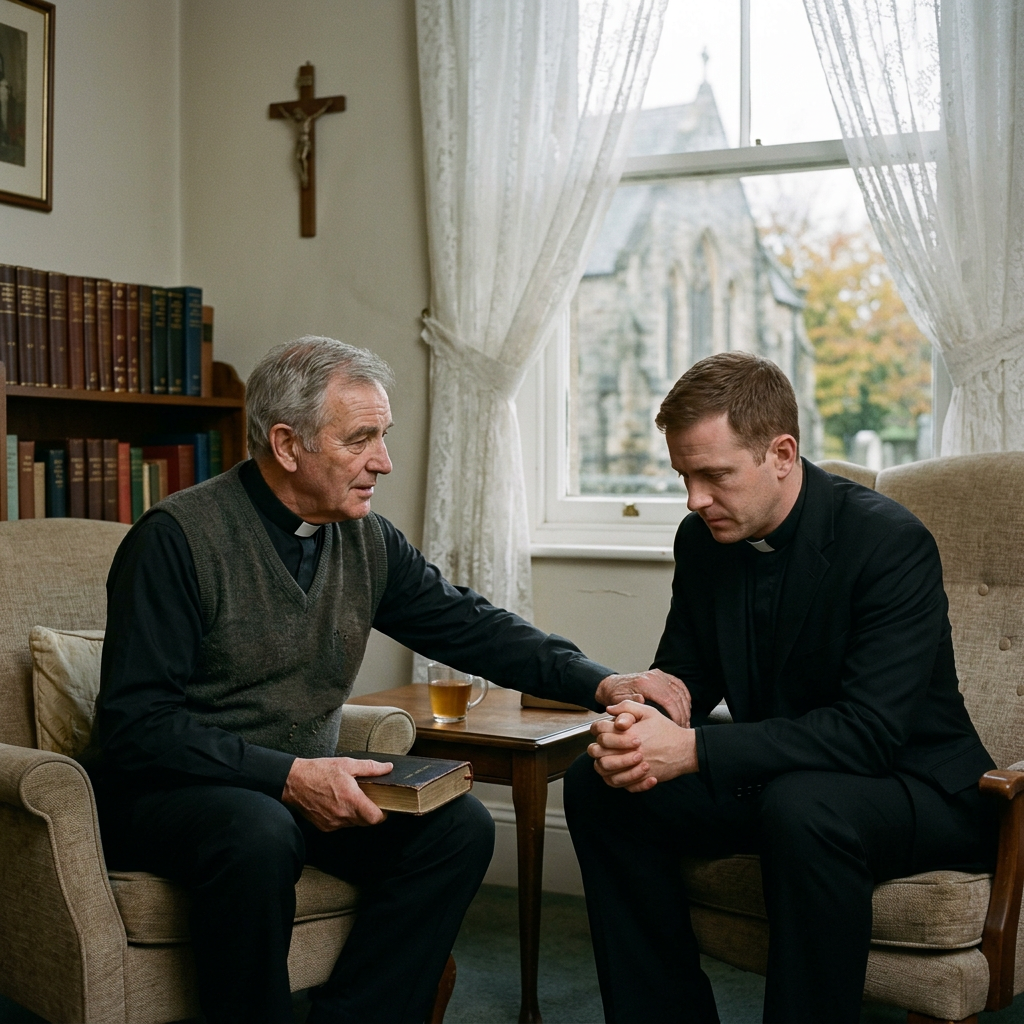
Well that should get our attention, which preps us to Jesus’ teaching that we behave in a different manner. This is what our Lord says in today’s Gospel: “If your brother sins against you, go and tell him his fault, between you and him alone” (Mt 18:15). Speak to him, face to face. Speak about clearly without raising your voice but with compassion as you to help him understand where he has erred. You do this for his good, which will help you overcome your embarrassment or reticence. The Holy Spirit will give you courage to say what needs to be said, which is not to pile on the offender but to say things to his face with kindness and gentleness.
Btu what happens if that doesn’t work? What if he just doesn’t get it? Then we must look for help. But don’t look for those who want to put the person down or to gossip. Rather, Jesus says, “Take one or two others along with you” (v. 16). Which people? The ones who genuinely want to heal the relationship and lend a hand to a brother or sister who has erred.
If he still doesn’t get it, then Jesus says bring the community. This is an intervention of sorts, but not to pillory the person by publicly shaming them, but rather to unite everyone’s efforts to help him change and for the good of the community, since we’re so interconnected by virtue of being members of the Body of Christ, the Church.
The community must make the person feel that, while it condemns the mistake, it values the person and prays for his good because they are a brother or sister in Christ Jesus. That’s why the community is always ready to forgive, to understand, and to start all over. What we have here is the pursuit of the truth, coupled with a deep care for the person in question and also for the entire family of the Church since love is our constant call by virtue of the Great Commandment.
May Mary, who continued to love as he heard people condemn her Son, help us always to seek the path of willing the good of others. Amen.


Leave a Reply