24th Sunday in Ordinary Time (A); September 13, 2026
Sir 27:30-28:7 Ps 103. Rom 14:7-9 Mt 18:21-35
Deacon Jim McFadden
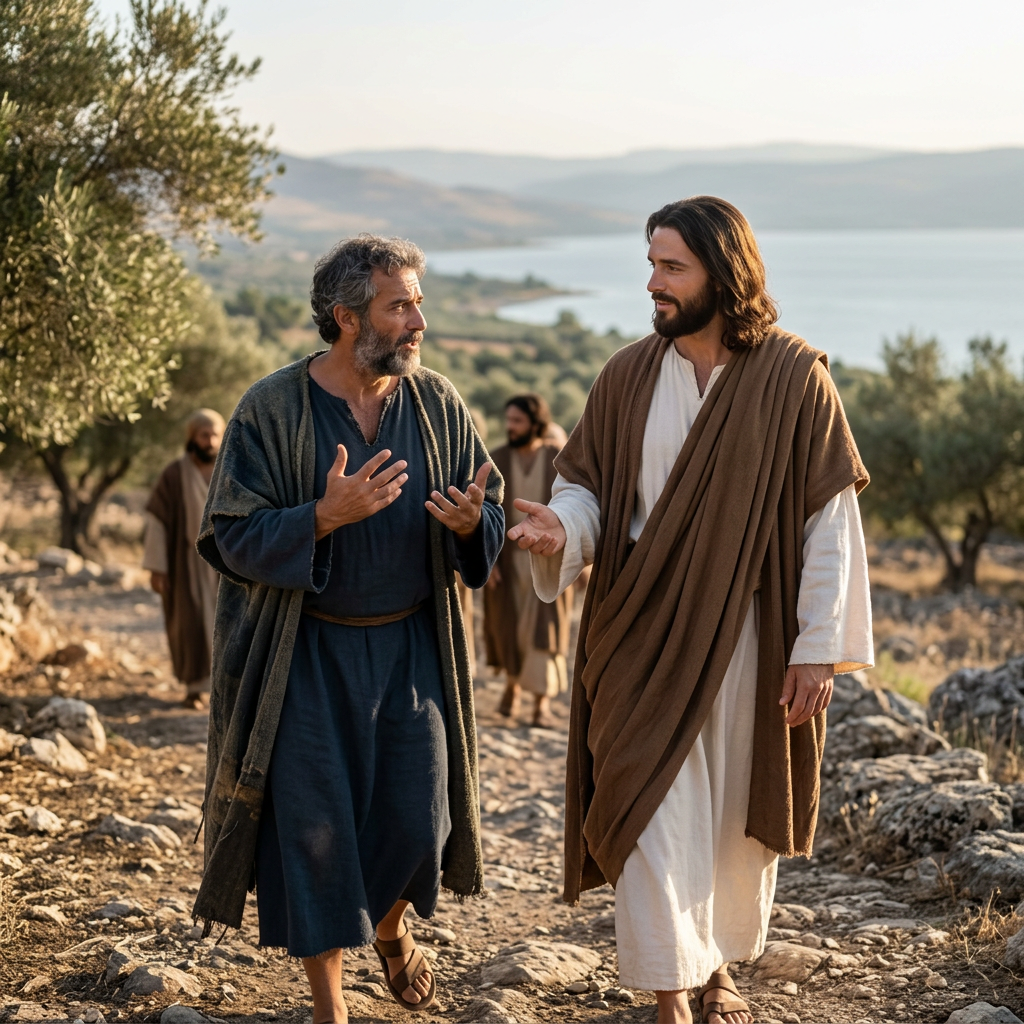
Today’s Gospel speaks to us about forgiveness. Peter asks Jesus a very straightforward question: “Lord, how often shall my brother sin against me, and I forgive him? As many as seven times? (Mt 18:21).
Peter is pointed in the right direction and the number ‘seven’ is not just something he pulled out of his hat, but ‘seven’ represents a perfect number: namely, something complete. So, Peter thinks that he is being very generous in the assumption of his question. But Jesus takes him further, which gets to the heart of the gratuitousness of God’s immeasurable mercy: i.e., it goes beyond counting, even a perfect number. So, Jesus says to Peter: “I say to you, not seven times but seventy-seven times” (v. 22). God does not calculate. God forgives everything—even the worst of sins: take your pick, God always forgives. And those who are members of the mystical Body of Christ are challenged to do the same. There are no exceptions.
Jesus illustrates this reality via a parable, which again has to do with numbers, but in a very exaggerated way. A king, after being implored, forgives a servant the debt of 10,000 talents. This is an excessive sum and according to Scripture scholars represents 200 to 500 TONS of silver. Practically speaking, there’s no way the supplicant would ever be able to raise that kind of money; in other words, it is an impossible debt to cover. Since the ‘King’ represents God, what does this say to us? God’s heart is so expansive, He forgives because that is His compassionate nature. God always forgives because He is Love: that’s His very nature. Forgiveness is simply God’s way of Being. And, since we’re made in God’s image, we are most human when we follow God’s example.
Now, the servant has other ideas. This guy whose enormous debt has been forgiven, when he leaves the King’s presence, he shows no mercy towards a fellow servant who owes him 100 denarii. Now this is a considerable sum, it’s not a trifle and is equivalent to about three months of wages. In other words, to forgive that amount would be costly, but compared to the previous figure that the master had forgiven, they’re not even comparable.
The message is clear: God forgives incalculably, exceeding all measure. That’s just Who God is. His forgiveness cannot be bought; there’s no transaction we can enter into. God’s forgiveness is free; it’s totally gratuitous. We cannot repay God for His forgiveness. But if we’re going to be in right relationship with God, we have to imitate Him, which means we forgive our brother or sister. Forgiveness is not some kind of good deed we can do or not do. Forgiveness is a fundamental condition for being a Christian. When G.K. Chesterton was asked why he became a Catholic, he answered, “To have my sins forgiven.” This is the greatest grace the Church can offer: reconciliation, the restoration of divine friendship, the forgiveness of sins, which we acknowledge at the Confiteor as Holy Mass begins. If we haven’t forgiven a brother or sister who has wronged us, then the rest of Mass will have no substantial impact on our soul. Indeed, how can we receive the Lord of Forgiveness in Holy Communion, if we have not forgiven those who have harmed us?
People of God, let us never forget that all of us are forgiven sinners. God gave His very life for us for our salvation. Jesus died for you! There is no way that we could ever recompense him for his mercy, in which He never withdraws His heart. What we can do, however, is to be gratuitous ourselves, that is by forgiving one another. And as we do, we are bearing witness that we are disciples of Jesus and are sewing new life around us in an atmosphere of hostility and retribution.
More to it, forgiveness is the only good option. An old Chinese proverb says that if a person cannot forgive and opts for revenge, he should dig two graves: one for the offender and one for himself! Outside of forgiveness there is no hope because we have created a barrier between ourselves and God. Outside of forgiveness there is no peace, which is a reflection of God’s loving nature. Forgiveness purifies the air of hatred. Forgiveness is the antidote to the poisons of resentment; it is the way to defuse anger, hostility, and resentment. It’s the way to heal so many maladies of the heart that are so regretfully on display that contaminate our society.
So, let’s ask ourselves: do you believe that you have received God’s immense forgiveness? Do you experience the joy knowing that God is always ready to forgive you, even when you fall, even when others do not, even when you don’t even forgive yourself?
If you said “yes” to the above, then engage a simple exercise: think of a person who has hurt you and ask the Lord right here, right now to forgive that person. And let us forgive that person out of our love for Jesus. Brothers and sisters, we need to do this for our own good because it will restore peace in our hearts.
May Mary, the Mother of Mercy, help us to accept the grace of God and to forgive each other.


Leave a Reply